
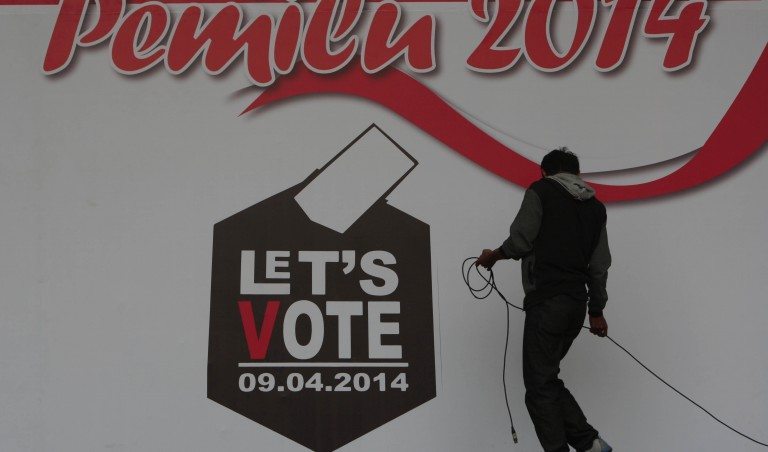
Indonesia is in the middle of counting votes for their Presidential election.

They were given a choice between one-time frontrunner Joko Widodo (jokowi), the Jakarta governor with a corruption-free reputation who is seen as the more market-friendly candidate, and main rival Prabowo Subianto, an ex-general facing a U.S. visa ban for allegations of past human rights violations. Prabowo once trailed by as much as 30 points in the pre-election polls, but as the election day approached, he managed to close the gap with an aggressive, nationalistic campaign. And even pro-Widodo counting puts the election very close.
Even a few weeks ago this election was supposed to be over, with Jokowi with a huge lead. So what happened?
Widodo’s once double-digit lead over Subianto has evaporated, according to some polls, in part because he’s been vague about which local government reforms and benefits he would introduce nationally. He was slow to act on a smear campaign suggesting he was a closet Christian, a scandal in a country that is 88 percent Muslim. He can seem wooden and unassuming.
His rival, Prabowo, by contrast, is a natural in front of the camera and a member of Indonesia’s ruling elite and ex-strongman Suharto’s son-in-law. He delighted by riding horse back into the Galora Bung Stadium in Jakarta to accept the nomination of the party he founded, the Great Indonesia Movement Party.
So why is this important- simply because of the size and potential of the Indonesian market- almost 180 million people, and enormous resources. Indonesia is about 40% of ASEAN in terms of the economy and in terms of the size of the population.
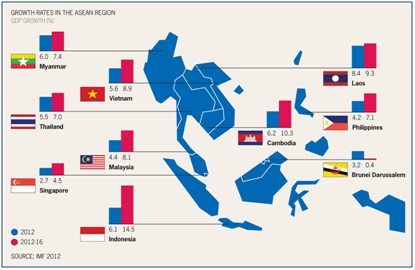
and is forecast to grow strongly to become a world raking economy

And so to all business based in ASEAN, Indonesia is a critical market, and they are facing an interesting election for president, who could change the shape of Indonesian development- more open or more nationalistic? Prabowo has been making some fiercely nationalistic speeches in a bid to differentiate himself from his rival and to motivate his voters to turn out.
Will this have an impact on your business?
The styles of the two presidential hopefuls are very different. Where Jokowi is calm and low-key, Mr Subianto has shouted himself hoarse during the campaign. His speeches are full of references to “foreign stooges” and “all of you who have a vision of Indonesian broken apart, a poor Indonesia”. In recent days, both candidates have declared victory- but they had to do that to support any post-election wrangling.
So would a Prabono victor spell trouble for business>
“All the rhetoric during the political campaign is likely to be thrown out of the window the moment either [candidate] is elected president,” Fauzi Ichsan, senior economist at Standard Chartered, told CNBC. “Indonesia runs both a current account deficit and a fiscal deficit,” he added. “Whoever is president, he will have to face the reality that to finance these deficits, he will need foreign investment, whether foreign direct investment or portfolio investments.”
The big challenge facing the candidates initially is energy and linked to this a dodgy currency. Whoever wins will face questions over how to cut the price tag on the government’s fuel subsidies while keeping the rupiah less weak.
Indonesia is expected to spend around 285 trillion rupiah (around $25 billion) on oil subsidies this year, swallowing up more than 15 percent of its budget and spurring cuts to other spending. In 2013, subsidies cost around 240 trillion rupiah, despite the government cutting the level mid-year. By comparison, the government aimed to spend around 200 trillion rupiah on infrastructure that year. Both candidates have said they will use the savings from cutting the fuel subsidy to finance infrastructure spending but can they afford to put voters off in the hope of better investments later?
Whoever wins will face questions over how to cut the price tag on the government’s fuel subsidies.Declining economic production and increased interest rates (to prop up the weak rupiah) certainly won’t make their job any easier. The expansion of Indonesia’s $900 billion economy has also declined to below 6 percent growth.
Expect the next 2 weeks to be messy as the votes are counted. Expect lots of posturing, as the expected winning margin is around 5%, which is capable of ‘external influence’ to tip the vote to one candidate or the other. Expect Prabowo not to go down without a fight- either in counting ballots or on the streets.
Heres a nice video from the Economist explaining things so far.
As we’ve seen in Thailand, though, once uncertainty recedes as a winner is announced and takes over, there is a strong hints that things will remain pretty much the same, and investment will start to return.