

I love the Hubert Horan series on Uber/Lyft and with other Unicorns -inhabiting their own enchanted gardens- venturing out into the real world can be a danger to their health. Here is his latest take down of Uber/Lyft source
Given Lyft’s terrible performance- down 45% on their IPO price- Uber abandoned its original $120 billion valuation objective. As it began its roadshow, it announced a $90 billion target ($55 per share) designed to raise over $10 billion in new investment. Despite claims that the offering was oversubscribed three times over, it later cut the offering price down to $45.
Press coverage of the Uber IPO explicitly acknowledged that it had been a “train wreck.” Vanity Fair’s headline said “Uber’s Colossal IPO Flop May Be the Worst Ever on Wall Street” while Gizmodo had no doubt that it was “The Worst Performing IPO in US Stock Market History.” Uber’s value had fallen roughly 35% from its mid-April target, and 50% from what Uber and their investment bankers said the value was at the beginning of the year.
Since they created roughly $80 billion in corporate value out of thin air, these “train wreck” IPO results were actually an unprecedented achievement.
When trading began on May 9th, Uber shares not only failed to get the initial price pop its investment banks were supposed to engineer, but they opened at $42, and steadily declined down to a low of $36. This meant that over 80% of the $29.5 billion invested in Uber over time was now underwater. Uber’s 2015 investors had lost 15% over a period when the S&P 500 rose 50%. Given the lower price, Uber raised $2 billion less new capital than expected.
These IPO results were obviously not the best case outcome for prior investors who were seeking roughly $145 billion ($120bn Uber, $25bn Lyft). But relative to Uber and Lyft’s actual (nonexistent) economic fundamentals getting independent investors to buy stock at prices that yield a combined valuation of $80 billion ($65bn Uber, $15bn Lyft) seems to be amazing accomplishment. The qualification is necessary since final judgements about the value created will need to wait until after the SEC mandated six month lockup period for pre-IPO shares expires (end of September for Lyft; early November for Uber).
Another obvious caveat is that this is not a positive accomplishment. From society’s standpoint it represents a massive misallocation of resources that significantly reduces overall economic welfare and raises troubling questions about the workings of capital markets. But it is an important and unprecedented accomplishment.
Uber and Lyft have spent nine years evading and actively subverting competitive market discipline
In a more ideal world the link between corporate value of Tech companies and their economic fundamentals is (loosely) enforced by competitive capital and consumer markets.
In order to allocate resources efficiently those markets depend on information about efficiency and other economic fundamentals (e.g., prices, financial results, investment requirements, media reports about company strategies and performance) being reasonably accurate.
Building a company with strong fundamentals and strong potential for long-term profitability is extremely hard. Uber is the breakthrough case of a company that skipped the difficult process of finding legitimate efficiency advantages, and used tens of billions in predator investor subsidies to fuel its rapid growth. These subsidies distorted normal price signals which in turn subverted the ability of consumers to allocate resources to the most efficient competitors. This also .subverted capital markets, as these artificial subsidies also exploited the myopic focus of Silicon Valley venture capitalist on topline growth.
While certain types of tech startups had used rapid early growth as a path to profitability, Uber insisted that its subsidy-fueled growth was actually evidence of powerful Amazon/Facebook-type scale and network economies that it did not actually have.
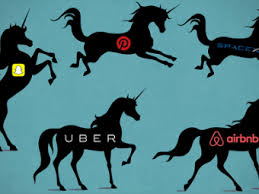
In the Enchanted Forest of Unicorns, your corporate value is whatever you say it is, and there are no independent investors who can wager money that you are wrong. In the Enchanted Forest, there are no audited financials that would allow anyone to challenge your narratives claiming your growth was driven by technology-driven efficiencies and powerful network economies.
ahhh what a nice gilded cage to live in… pity companies have to eventually leave and meet Mr. Market … a corporate bloodbath will ensue.