

I don’t think I can add to this
The UK’s former representative to the EU, Sir Ivan Rogers spoke at the invitation of the University of Liverpool’s Heseltine Institute for Public Policy, Practice and Place.
Watch the video:
Part One: https://stream.liv.ac.uk/s/avayyhv5
Part Two: https://stream.liv.ac.uk/s/f8p8jadm
Here’s the the script
https://news.liverpool.ac.uk/2018/12/13/full-speech-sir-ivan-rogers-on-brexit/
for a “European view” the London review of books offers this
https://www.lrb.co.uk/v41/n01/on-brexit/what-europeans-talk-about-when-they-talk-about-brexit
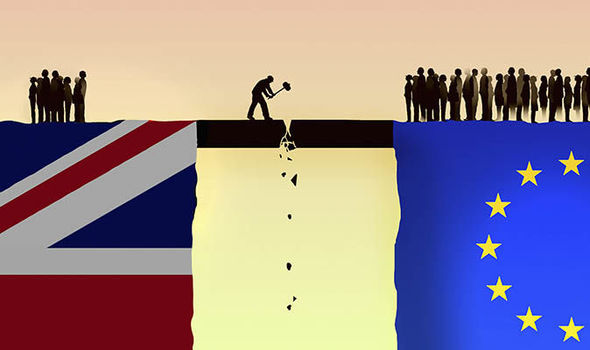
and here’s Ian Welsh’s View of what’s driving the EU
“The EU, as it stands now, was designed by a set of people that had different attitudes and goals over time. Therefore, it is a mixed bag, when it comes to good, not good, works, doesn’t work. A good chunk of its institutions were designed at around the peak of the neoliberal revolt against state management of the economy.
In the EU, this took its expression in an approach to the economy that militated against state attempts to protect or bolster industrial employment in both public and private sectors. Unlike the US there is a stronger commercial regulatory apparatus developed even in the neoliberal era that what other developed “capitalist” countries tend to have. The neoliberal bits, especially the most recent ones like the Eurozone, have increasingly showed themselves to be not good and not working.
But this cannot be taken out of the context of the whole. It’s increasingly clear to me that Europe is still not that far off from the overall intended trajectory of the two generations of designers of European convergence. It is absolutely true that those who built the system had, for a number of different reasons, a deep suspicion of the public and popular sovereignty, even while they were also against outright dictatorship. I generally consider this to be overall not good and probably won’t work in the long run. (But I must note that the designers of the EU also recognized that they might need to legitimize popular sovereignty at a European level and built in provisions for systems to implement it.) However, they believed both in the necessity of European unity (in the modern world, a disunited Europe is structurally deeply vulnerable), and the difficulty in getting a multilingual, multicultural subcontinent of fallen empires to accept the necessity of unification, so they constructed a system of what are effectively one-way traps to ensure that the cost of departure is always greater than the cost of endurance, even when the system in some matters doesn’t work. The goal is therefore for this endurance to eventually result in a crisis whose only positive-sum resolution is the Europeanization of authority.
With Italy’s effective capitulation to the Commission, and yes, with Greece’s previous compliance, and yes again, with a Brexit that is already providing the necessary object lessons, it appears that the crisis-and-trap strategy is still operating, or rather, it cannot be said to have failed at this point in time. That is, it remains that case that the strategy of making a series of systems that don’t work is working.
So what would the decline of the European project actually look like? If I were forced to make a prediction, however, the political coming-apart would probably have to look like this: either
(1) a situation comes to pass where it is immediately more materially beneficial to leave than to stay (has not yet ever happened);
or (2) one or more countries decide to leave a major institution/treaty despite the costs, and they do economically better in the relatively short run after departure (Brexit under the Tories is not likely to be an example of this);
or (3) a consensus develops in several countries that long-term economic suffering is more desirable than staying in the EU, even if that suffering is greater than what they might have experienced inside the EU, and they sustain this consensus even after feeling that suffering.
All of this may lead you to consider projects like the European unification, designed explicitly around creating consequences that override popular will, to be not good.
From me… the approach making leaving substantially more painful in the short term compared to the lesser but much longer-term pain of remaining seems to lock in politically ambivalent short-term focussed elites