
One of the key messages I’m trying to inform General Managers about is that when it comes to consumers, we have to be expert psychologists. Nothing is ever as simple as it seems. And when it comes to consumers price is as much a perception as in any other area of consumer engagement. Here is part 6 in a series on consumer pricing perception.
Maximize Their Reference Price
The past two strategies described over the past few weeks, helped you how to lower the perceived magnitude of your price. However, you can achieve the same effect by maximizing the perceived magnitude of other reference prices.
TACTIC 12: Start Negotiations With a High Precise Number
Due to anchoring, we all know that sellers can get more money by starting negotiations with a higher initial offer (Galinsky & Mussweiler, 2001). That higher number establishes an anchor point, pulling the final settlement closer to that range.
Not only should you start with a high initial price, but you should also use a precise value. In one study, Janiszewski and Uy (2008) asked participants to estimate the actual price of a plasma TV based on the suggested retail price — either $4,998, $5,000, or $5,012.
When participants were given precise values ($4,998 and $5,012), they estimated the TV’s actual price to be closer to that range. When the suggested price was rounded ($5,000), participants believed the actual price to be much lower.

When an anchor is precise, we adjust our estimate past fewer units. Why? You can thank your mental ruler. As Thomas and Morwitz (2002) explain:
“If adjustment is viewed as movement along a subjective representational scale, then the resolution of this scale might also influence the amount of adjustment. X units of adjustment along a fine-resolution scale will cover less objective distance than the same number of units of adjustment along a coarse-resolution scale.” (pp. 121)
That insight works particularly well in eBay auctions. When creating your auction, you can generate more revenue by establishing a high reserve price — a price that needs to be met in order for the item to be sold. Higher reserve prices anchor people toward the higher end of the price spectrum, resulting in more revenue (Kamins, Dreze, & Folkes, 2004).

TACTIC 13: Expose People to a Higher “Incidental” Price
Given our tendency to look toward an anchor point, could exposure to high prices — even for unrelated products — anchor people toward the higher end of the price spectrum? And then would those people pay a higher price for your product?
Nunes and Boatwright (2004) tested that possibility. On a popular boardwalk in West Palm Beach, the researchers sold music CDs. Every 30 minutes, the adjacent vendor alternated the price of a sweatshirt on display — either $10 or $80.
What happened? The sweater’s price anchored people toward the respective ends of the price spectrum. When the price of the sweatshirt was $80, shoppers paid higher prices for the CDs.
If you’re selling items on eBay, you might want to mention some of the other items you have for sale (the more expensive items, of course).

TACTIC 14: Expose People to Any High Number
Anchoring not only works for prices, but it also works for any number, regardless whether that number is a price.
Here’s a striking example. Ariely, Loewenstein, and Prelec (2003) showed participants various products (e.g., cordless keyboard, rare wine, Belgian chocolates). They asked participants whether they would purchase each product at the dollar amount equal to the last two digits in their social security number.
After receiving a YES/NO answer, researchers then asked participants to state the exact dollar amount they would be willing to pay.
Remarkably, the researchers found a direct correlation between the social security number and the price that participants were willing to pay. Here’s the data for one of the products, a cordless keyboard:

How can you apply that finding? Should you simply ask customers to contemplate a high number? Not quite. Luckily, your job is easier.
Anchoring effects occur subconsciously, so consumers don’t need to contemplate a numerical anchor. In fact, Adaval and Monroe (2002)subliminally exposed people to a high number before displaying a price. That exposure caused people to perceive the subsequent price to be lower.
The takeaway? Even if potential customers don’t consciously notice your numerical anchor, they just need to be exposed to it.
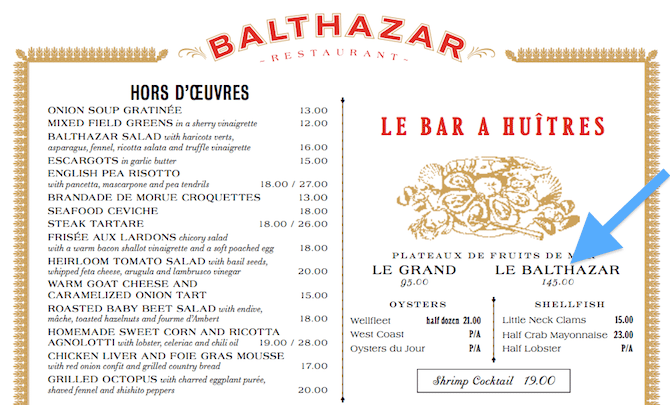
If you run an online store, you could simply mention your total number of customers near your price. When people generate their reference price, that high number will trigger an anchoring effect (and their reference price will be even higher).

TACTIC 15: Raise the Price of Your Previous Product
If you’re launching a new (more expensive) version of your product, how should you price the old product?
Some businesses will lower the price of their old product to gradually phase it out of the market. Surprisingly, though, that strategy is often the wrong approach.
Baker, Marn, and Zawada (2010) suggest raising the price of your old product. By raising the price, you raise people’s reference price (thereby enhancing the perceived value of your new product). You’ll be releasing the new product into more favorable conditions.
Conversely, if you lower the price of your old product, you set yourself up for failure. You’ll reinforce a lower reference price, which will make your new product seem more expensive.
