
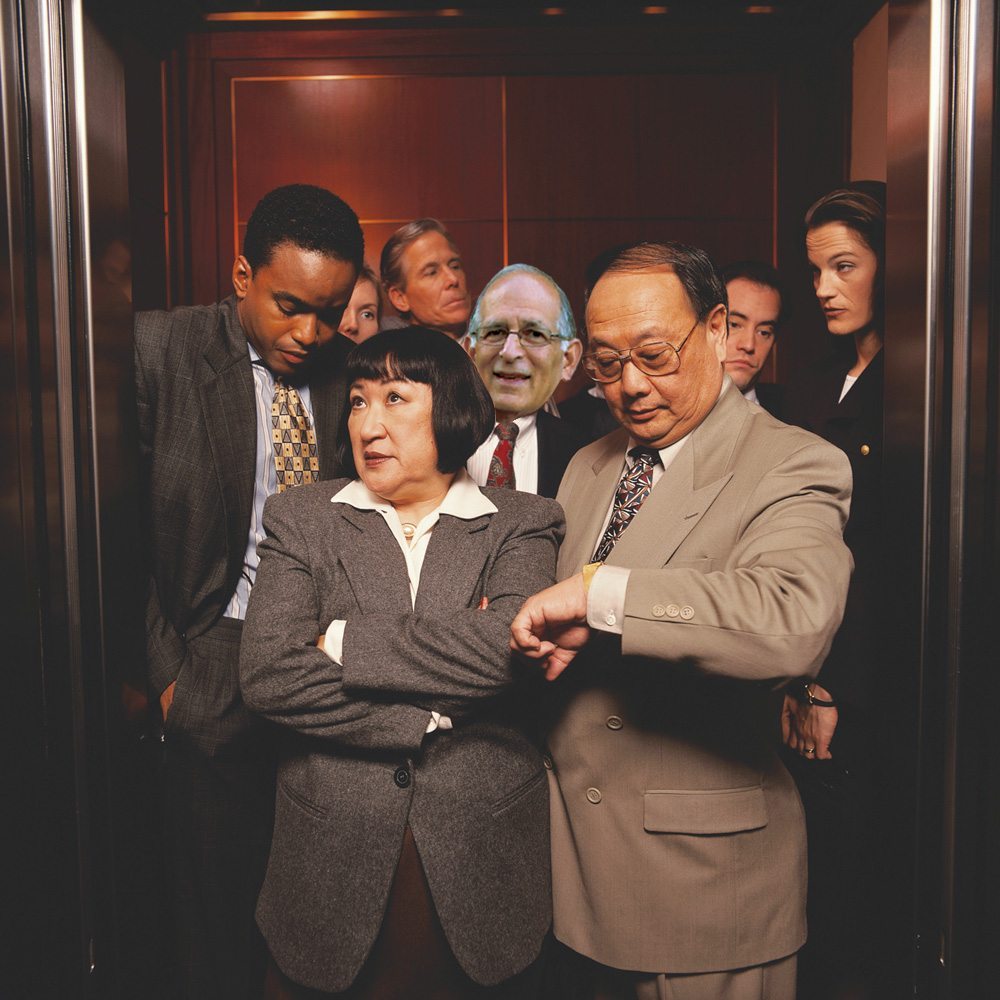
The elevator doors are about to close on you as you try to get in. People are already inside the elevator. One of the people is in a hurry and does not want to wait and was pushing ‘door close’. There is also a bubbly, energetic passenger who holds the door open while greeting you. A third rider is happy either way and smiles while waiting patiently. The final passenger is concerned as she calculates the weight to see if the elevator can handle another person .
We meet new people almost everyday and have to find ways to interact. More important than casual meetings is finding ways to work with colleagues. I recommend an understanding of DISC to assist in understanding peoples behaviour and underlying motivations.
I have a strong preference to work with DISC- a personal assessment tool based on ones normal behaviour – as a foundation for understanding oneself and those we work and live with. It provides a framework for discussing peoples behaviour preferences in certain situations. This preference for DISC is built on over twenty years of working with DISC as a hiring aid, as well as the background validation work done by those companies who support DISC.
This model of human behaviour is based on 2 foundational observations about how people normally behave as we saw in the elevator story:
- Some people are more outgoing, while others are more reserved. Some people think of this as extroversion/introversion, others think of it as the way people react to the world around them
- Some people are more task-oriented, while others are more people-oriented.
It could be said that this creates a behaviour matrix for people in a particular situation. Some people are focused on getting something done; others are more tuned-in to the people around them and their feelings.
These behavioral tendencies are neither right or wrong or good or bad and with DISC these results are ones own preferences rather than others observations. DISC uses your own views of your normal behaviour styles in a nominated situation.

Thus, we have 4 behavioral tendencies to help us characterize people:
• Outgoing
• Reserved
• Task-oriented
• People-oriented
We each have some of all 4 of these preferences at different times and in different situations.
However, most people typically have 1 or 2 of these preferences that seem to fit them well in their everyday behaviour. And 1 or 2 of these preferences usually do not fit them well. The balance of these 4 preferences shapes the way each person “sees” life and those around them and is displayed in the behaviour they display.
Thus, 4 basic personality traits emerge from combining the behaviour preferences
• Outgoing and Task-oriented
• Outgoing and People-oriented
• Reserved and People-oriented
• Reserved and Task-oriented
or in a diagram format

Describing Each Personality Style (4 Different Types – 4 Different Priorities)
Notice the letters D, I, S and C appear in the 4 quadrants of the circle in the diagram. You will also notice that descriptive terms have been added in each of the 4 corners of the diagram.
The Dominant “D” type – An outgoing, task-oriented individual will be focused on getting things done, accomplishing tasks, getting to the bottom line as quickly as possible and MAKING IT HAPPEN! Only 3% of respondents typically prefer a D style, although it seems a lot more than that at work!
The Influencing “I” type – An outgoing, people-oriented individual loves to interact, socialize and have fun. This person is focused on what others may think of him or her. Around 11% of respondents prefer an I style.
The Steadiness “S” type – A reserved, people-oriented individual will enjoy relationships, helping or supporting other people and working together as a team. Around 69% of respondents have a preference for an S style.
The Compliance “C” type – A reserved, task-oriented individual will seek value, consistency and quality information. This person focuses on being correct and accurate. About 17% of respondents prefer a C style.
So lets go back to the elevator
While not perfectly scientific, this scenario depicts in broad brush strokes the Dominant (outgoing/task-oriented) person who is focused on getting somewhere fast; the Inspiring (outgoing and people-oriented) person who is energised by all the interaction; the Steady (reserved/people-oriented) person who reacts calmly and tries to get along regardless; and the Compliant (reserved/task-oriented) person who wants to make sure the added person doesn’t exceed the weight limit.
Having an understanding of DISC will enable you to better understand yourself and your behaviour preferences and how you portray yourself to others as well as understanding better those who you work with.
acumen.sg is certified to utilise both online and offline DISC profiling and to be able to assist you understand yourself an others.
2 Replies to “An introduction to DISC”
Comments are closed.