
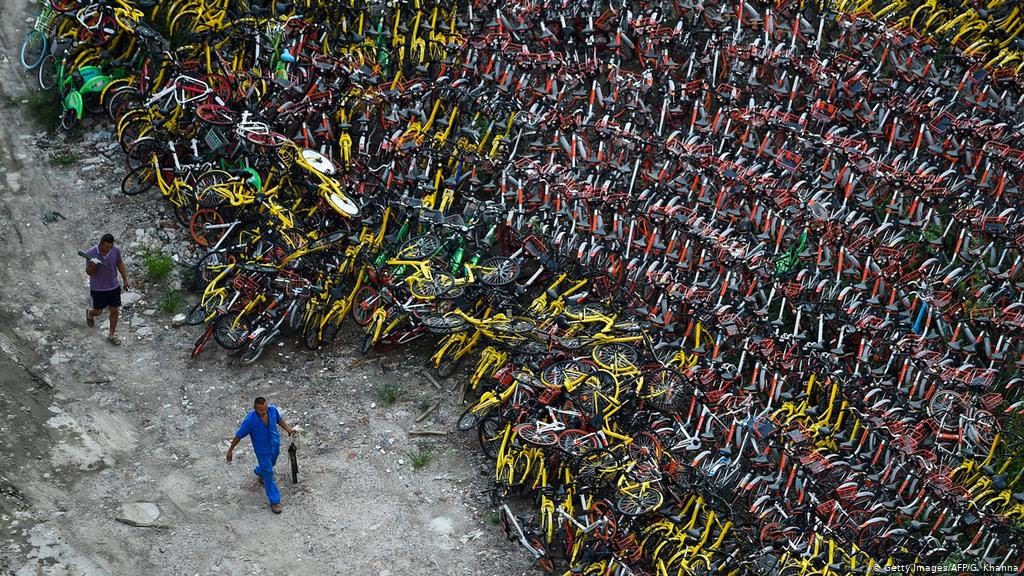
I never perceived bicycle sharing as a tech company- thousands of investors and billions of dollars thought otherwise in a rush to become tech unicorns. Ofo, the Chinese bike-sharing company grew from obscurity to a valuation of around $3 billion at its highest point. Before the fireworks came to an abrupt halt, Ofo had raised a whopping $2.2 billion. Then, suddenly, its fortunes turned and it found itself close to bankruptcy with hundreds of thousands of lost or broken bikes.
When the bubble bursts it is tax payers around the world left to foot the bill as lawmakers were unable or unwilling to intervene. This is another example of privatisation if profits and socialization of losses. Any money made is kept by investors. But when things turn bad, investors immediately demand government support or quickly close the company and walk away leaving tax-payers to pick up the mess.
The problem (in more detail)
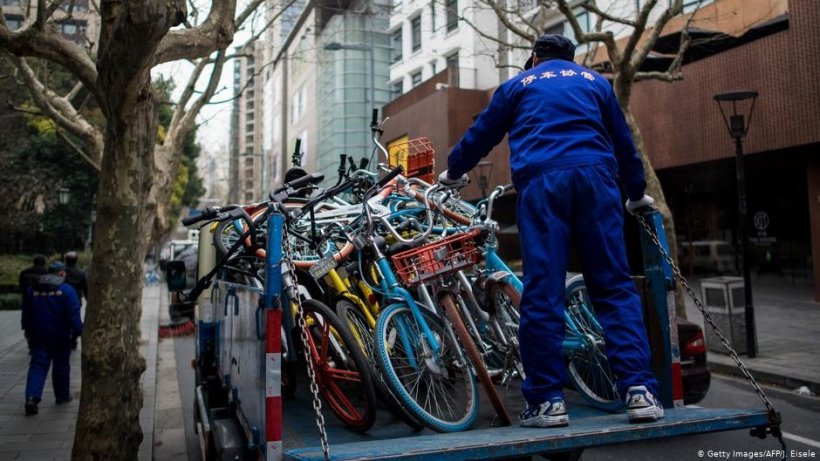
The world-wide bike-sharing craze sucked in billions of dollars of investors’ cash and billions in clients’ deposits that start-ups spent on millions of new bikes in an effort to grab market share. When the inevitable collapse came, most of the companies went bankrupt, leaving city authorities having to pay to clean up the mess.
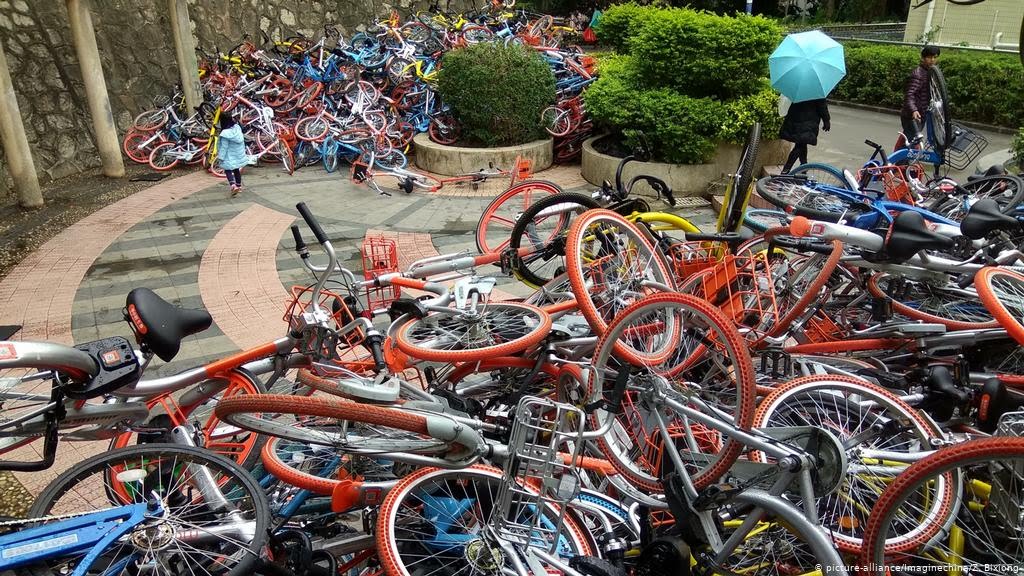
Billed as the new tech unicorns, Bike rental management never grappled with the boring details of simple logistics (moving bikes from where they lay to where they were in demand) and simple repairs and maintenance. Tech could assist with neither… but tech did enable cash to be siphoned from users to owners. Even in bike crazy China, the two market dominant players continue to lose three to four times revenue as costs significantly outstrip the low charges consumers are willing to pay. Mobike has continues to make huge losses after discovering it continues to lose hundreds of thousands of bikes per year to theft or vandalism. China’s current winner of the bike-sharing race Mobike’s revenue in 2019 at $223 million, which is contrasted by a loss of $680 million. Costs like the repair & maintenance for the bikes, operational costs for moving them around and asset depreciation, don’t scale and don’t diminish with scale.
The cost
The sheer volume of abandoned bikes is overwhelming. One Chinese government unit estimates there were as many as 20 million shared bikes in use in 2017. Xiaoming, just one of the 60 or so Chinese bike-sharing app companies that went bust, left 430,000 of them across more than 10 Chinese cities. One of the biggest heaps in central Shanghai had 30,000 abandoned bikes, according to Xinhua. All together it’s estimated that 4 million bikes have been scrapped in China.
Across Europe, Singapore’s Obike has lost at least 75% of its bikes and the tracking app no longer works And in bankruptcy in Singapore is unlikely to return the €79 deposit hundreds of thousands have paid. Other Asian bike rental companies have also cut their losses by abandoning both bikes and businesses in Europe and despite commitments to return deposits this is rarely if ever done.
Unintended consequences
No one wants to pay for the mess left . The bankrupt companies are gone, mostly unable to even return customers’ deposits. The investments have been written off, so the taxpayer has to foot the bill. Bikes from the boom are still being found in rivers and overgrown verges and, added to that, safety rules mean that even the remaining players have to replace their vehicles every few years. Only in the most positive of realistic scenarios could bike rentals have made money.
Governments certainly saw the upside of such “green” and “tech” innovation but a simple ‘what if…?’ Analysis could have easily identified over capitalisation and collapse as a possible outcome of the hyper-competitive market. And some form of risk-management put in place to cover clean up costs.
Another example
The US is in the midst of the collapse of an unsustainable oil and gas boom. Fracking and other new means of extraction has meant high-cost expansion of capacity in a time of plummeting demand. Bankruptcy abounds. Companies walk away from wells leaving the local authorities to clean up their mess… or not.
Gas companies are abandoning their wells, leaving them to leak methane forever. Just one orphaned site in California could have emitted more than 30 tons of methane. There are millions more like it. Again simple what if..? Analyses could have highlighted the problems and risk-management tools provided a remedy, but it appears greed and bribery means another example of privatised profit and socialised losses.
So… what’s the next tech boom we’re going to have to clean up… we had electric-scooters briefly flare. At least there were owned by an individual but again the unintended consequences of poor management created a collapse in almost every city they appeared. I’m awaiting what’s next as the desire to become a billionaire without working too hard is strong.