

The foundation of being a great General Manager is not your skill or focus, its your ability to bring together and bring the best out of a great team of people. In the seventh in our series I’ll discuss how to do that.
Ok I’m going to make a provocative statement, bear with me … good general managers do not really “do” anything. If you’d like to understand my thinking check out this very long post “CEOs don’t steer”
As a new leader, your key responsibility is to create a work environment in which a diverse group of people are motivated to do great work as a team or as a team of teams. It’s your job to build a high-performane that is innovative, efficient, and effective. But this doesn’t mean that you should do your team members’ jobs yourself. Instead, your role is to create a motivated team in a conducive work environment that fosters psychological safety.
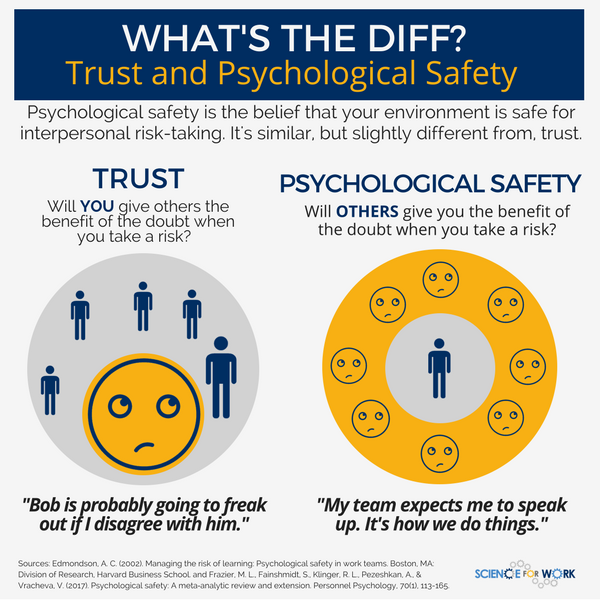
Psychological safety is the belief that one can take interpersonal risks without fear of negative consequences to self-image, status or career as the above diagram describes its people in the team believing THEY will be given the benefit of doubt if they raise anything challenging. In diverse teams, psychological safety is essential for team members to feel comfortable sharing their ideas, opinions, and concerns without fear of retaliation or judgment. Psychological safety allows for cognitive diversity, which is the different ways people think about and approach tasks. This cognitive diversity leads to significantly more innovative and effective solutions to problems. Recent studies have shown that diverse AND inclusive teams are the best performing, but it’s the inclusivity that’s key… without the inclusivity created by psychological safety diverse teams perform badly.
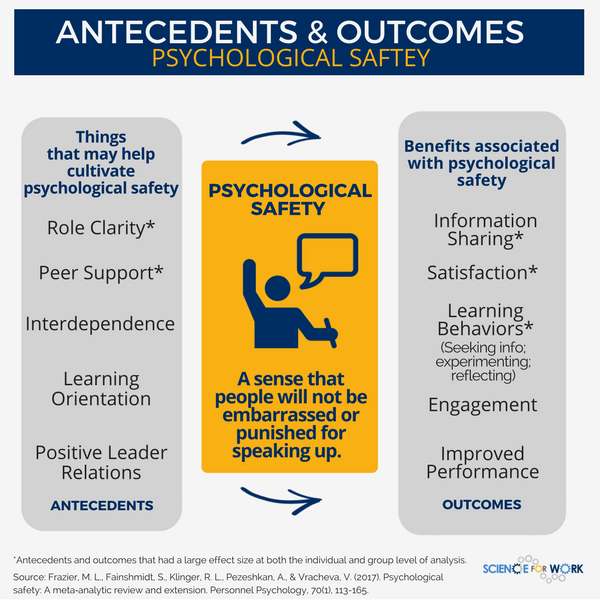
So, how can you create psychological safety in your team? The primary way is by building mutual trust. Trust is the belief that others will act in ways that are reliable, fair, and ethical. Trust is the combination of ability, integrity, and benevolence. Ability refers to the skills and knowledge needed to complete tasks. Integrity refers to the experience of ethical principles that guide behaviour displayed over time. Benevolence refers to the moral values showing genuine concern for others’ well-being and a mutually beneficial relationship. As a leader, you can build trust by demonstrating these qualities and encouraging them in your team members.
Conflict is the prime factor that destroys trust in diverse teams. There are two types of conflict: cognitive or beneficial conflict and affective or negative personal conflict. Cognitive conflict is a healthy debate or disagreement over logical ideas, approaches, and solutions that can lead to better outcomes. Affective conflict, on the other hand, is personal and emotional, often resulting from a clash of personalities, values, or beliefs. Affective conflict is destructive to team dynamics and motivation and fear of such affective or personal conflict is the key reason preventing inclusive team dynamics.
It’s tough for new leaders to both promote cognitive conflict and manage or avoid affective conflict, there are several proven ways to boost motivation in diverse teams. One way is to establish clear expectations and guidelines for communication and conflict resolution. Encourage team members to listen actively, acknowledge differences, and find common ground. Encourage the use of “I” statements instead of “you” statements to avoid blaming or accusing language. Create a culture of open communication and feedback. Praise publicly; criticise in private.
Another way to boost motivation is by creating a culture of appreciation and recognition. Celebrate team members’ successes and milestones, and acknowledge their contributions. Show appreciation for their hard work and dedication.
Creating a work environment in which a diverse group of people are motivated to do great work is the general manager’s critical responsibility. To achieve this, leaders should focus on building psychological safety by building trust and managing conflict. Trust is the combination of ability, integrity, and benevolence. Conflict can destroy trust in diverse teams, so it’s essential to promote cognitive conflict and manage or avoid affective conflict.
GreT intro series. I really like the insights I’ll be using them from now on