

You’ve inherited what you consider a dysfunctional team, but what makes you think they are dysfunctional? IN the last two weeks we have discussed the real basis for dysfunction a lack of trust and an inability to manage conflict. Once you’ve overcome these two- we get to addressing a lack of commitment.
Patrick Lencioni created a very understandable model about how and why teams are dysfunctional and how you can assist them to function better. Lets work at the base, the most fundamental dysfunctions, and work our way up.
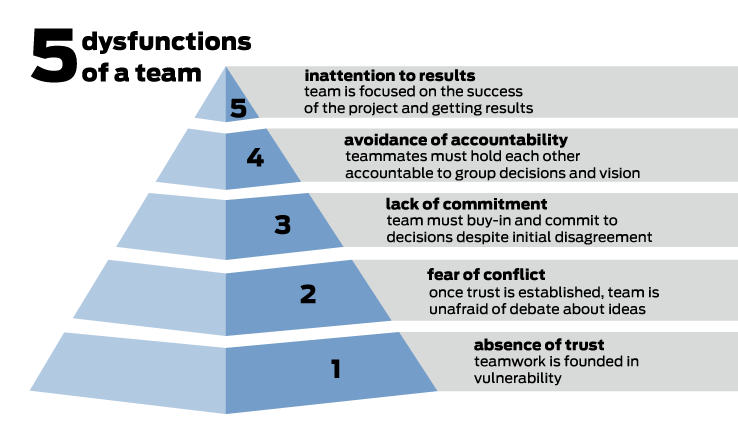
3. Lack of commitment
The evidence of the presence of this dysfunction is ambiguity. When people don’t unload their opinion and feel like they’ve been listened to (due to fear of conflict), they won’t really get on board.
I’m not talking here about consensus nor submission. Consensus is horrible. It’s rare everyone really agrees on something naturally and quickly. Typically consensus becomes an attempt to please everyone, which typically turns into displeasing everyone equally. Most reasonable people just need to be heard, and to know their input has been understood, considered and responded to.
You can call it disagree and commit.
Submission occurs when an over bearing boss seeks to win every conflict rather than sitting back and listening to the views of their team. This style of leadership stems from both a lack of trust (“I’m better than everyone”) and fear of conflict (“I don’t need people to try and prove me wrong when I’m right”)
Commitment is a function of 2 things: clarity and buy-in.
Great teams move forward with absolute clarity on what’s been agreed and what actions each member will make. Complete buy-in includes the willingness to positively accept and agree by team members who voted initially against the final decision. All team members leave meetings confident that no one is quietly harbouring doubts whether to support the actions agreed on.
The 2 greatest causes of lack of commitment are the desire for consensus and the need for certainty:
Seeking consensus is dangerous. Great teams ensure that everyone’s ideas are genuinely considered, which creates a willingness to rally around the ultimate decision by the group knowing that any decision is better than no decision. Great teams unite behind decisions even when there is little assurance about whether the decision is correct. Often the teams have all the information they need to make a decision, but it needs to be extracted out of people’s hearts and minds through unfiltered debate. Fear of failure is often a culprit here, and the team needs to accept that failure could occur and will be accepted as long as the effort was genuinely put in.
Suggestions:
- At the end of a meeting, the team spends a few minutes to review key decisions made during the meeting and what needs to be communicated outside of the meeting about those decisions. (Often members learn that they are not all on the same page and need more clarification before putting them into action.)
- Use a clear deadline for when decisions will be made — ambiguity is the worst enemy of commitment, and timing is one of the most critical factors that must be made clear. Committing to deadlines for intermediate milestones is just as important as final deadlines, because it ensures the misalignment among team members is identified and addressed before the costs are too great.
- Try using a pre-mortem to build agreement. Take the time to identify ALL the reasons a decision could fail, and then seek to address these (avoid, mitigate, buy insurance).
- follow this with a brief discussion on contingency planning and worst-case scenario fears to allow others to overcome their fears.
The leader must be comfortable with the prospect of making a decision that turns out to be wrong, and must be constantly pushing the group for closure around issues.
Next we discuss the fourth dysfunction; avoidance of accountability