

I like this picture. When ever I show it in relation to “change management” everyone immediately gets it… they are the ones trying to push the rock.
In 2019, I wrote about my views on change, and a series of models of change. I’ve reviewed it, updated it, and here I present it again.
Typically, people apply a change model. I have worked with around 8 of these (including Kotter’s eight step change model) and I’ll share these later. But consistent research shows that most change programs fail to achieve their desired results (Kotter 1978, 1996, 2007; McKinsey 2008, 2015; Anand & Barsoux 2018). So repeated surveys show that change more often than not fails… here’s my explanation.

Initially change was seen as a Simple Obvious recipe. It was a three step or an 8-step linear process with simple instructions. Follow the recipe and create predictable outcomes. Change is baking a cake… except the cake rarely rose.
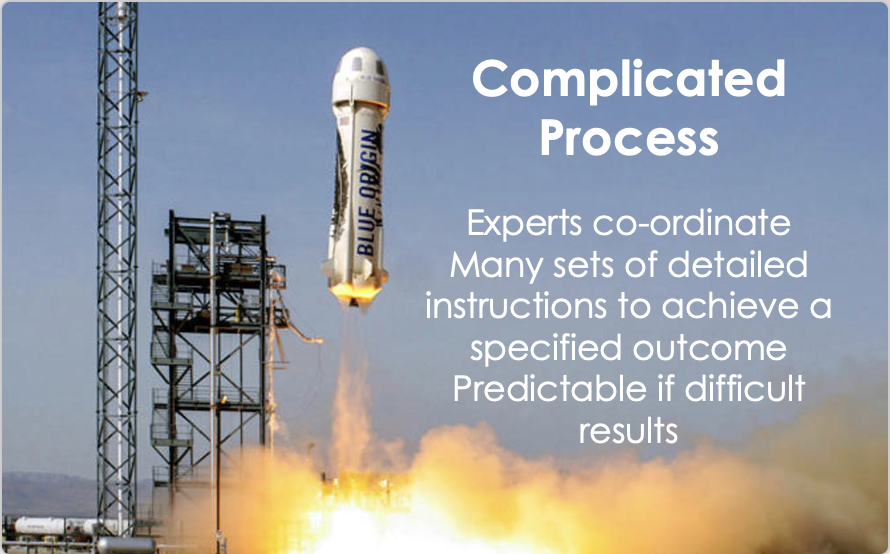
With the advent of management consultants like McKinsey and Posci, change was reborn as a Complicated Process. It needed to take into consideration many factors that would impact the result. It needed greater structure and to work it must affect relations within the organisation. Experts were necessary to assist implement the process. Their role was to there to develop the plan and co-ordinate with management. They provided many sets of instructions to achieve a specified outcome and then departed the scene. But in the end by using this complex approach there was a predictable outcome- change tended to rail still. Change was seen like sending a rocket to the moon- complicated but able to be broken into many individual steps, to be overseen by experts. Except that sometimes, most times, the rocket didn’t want to go. The organisation didn’t want to change
Change is like RAISING a BABY

For me, change is a Complex Engagement, akin to raising a baby. We must accept the inherent variability and uncertainty of a dynamic environment. People can change their views of the project and then quite simply change back- its not a linear process.
We have to be engaged with our people and open to surprising outcomes- much like raising a child. And just like raising children, the object of your change – the team- has as much say in the process and you do. This change is unpredictable.
We need to be aware of and understand how we can formally and informally influence people within the team. I use three simple words to highlight the leaders role in change – Empathise, Envision and Equip.
EMPATHIZE
Understanding the human element in change management is a crucial prerequisite for successful transformation. Leaders must first “empathize” with their teams, which entails grasping their concerns, apprehensions, and hopes in relation to the impending change, especially before the change is conceived. This step is crucial as it validates team members’ emotions and perspectives, promoting their sense of belonging and trust. Leaders who can empathize effectively will be better equipped to manage resistance and promote acceptance of the change. By demonstrating genuine interest in their feelings, leaders show that they are not just imposing change, but are genuinely concerned about their teams’ wellbeing throughout the transition.
ENVISION
A shared vision, the second crucial element, helps galvanize the team towards a unified objective. Leaders and their teams must “envision” the change together, creating a shared understanding and commitment to the goals of the change. This process cultivates a sense of ownership and collective responsibility within the team. It provides a clear and compelling picture of what the future could look like post-change, thus fostering motivation and engagement. To craft this vision, leaders must facilitate open dialogue, incorporate feedback, and clearly communicate how the change aligns with both the organization’s strategy and the team’s values and aspirations.
EQUIP
Finally, to successfully navigate the change process, leaders must “equip” their teams with the necessary knowledge, tools, skills, resources and connections to succeed. An essential element here is creating spare capacity, most successful people are working at full capacity and for your plan to be successful, equip your team with breathing space, stop less necessary activities to enable change have room to breathe. Additionally, this includes providing appropriate training, tools, and support to help them adapt to new procedures or systems. Furthermore, it involves equipping the team emotionally, by cultivating a safe and supportive environment where team members feel comfortable expressing concerns and asking for help. Remember, providing support is not a one-time act; it’s a consistent process that reflects the dynamic nature of change. By equipping their teams adequately, leaders not only ensure a smoother transition but also foster a culture of learning and resilience, which is invaluable in the face of future changes.
Thus, Having a mental model of change is vital
Without a mental model for you and your team to follow you don’t stand a chance of being able to consistently conceive any changes made in your organisation as you seek to raise this baby.
Unless you hold a solid mental model for for assessing and then deploying your changes, you won’t know what information you need to focus on at each stage of the change to know how to improve your business.
Before we go any further, I believe there are three critical responses from your team, potential barriers to change, that need to be addressed in any change or implementation project.
- “I don’t get it”, there is a mutual lack of awareness and clarity around the project
- “I can’t do it”, there is a lack of belief that the solution can work
- “I don’t want it”, there is a lack of willingness to commit to the change
Here’s my mental model to address these three responses… its very simple

I believe to engage with a change audience we need three stages, mirroring Lewin’s model later in this piece. In phase 1, we seek awareness.
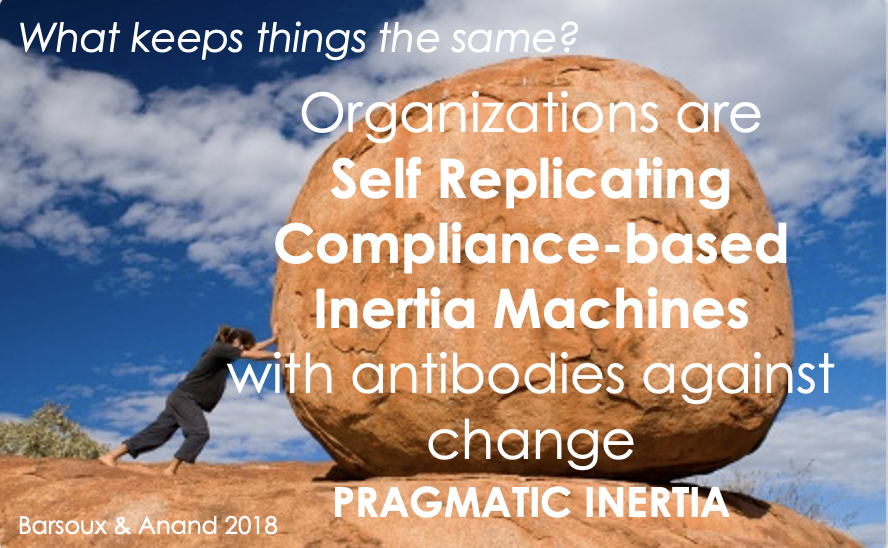
Awareness of our personal credibility to engage with change is essential. How are we seen by our team members peers, bosses. Have we the capability to implement change? Are we trusted? Without this initial stage of credibility, change fails before we even start. The reason this is important is that change is DISRUPTIVE, and only credible leaders can positively disrupt organisations.
Then we need to become aware of the capability and capacity to change of our team? Can they engage with change? Will they? We need to spend time making ourselves aware of the challenges our team members face to enable us to link our approach to their needs and desires. At the same time we are making our team members aware of the urgency and importance of this change program. The reason for this is that SUCCESSFUL organisations have antibodies against change – core rigidities that enable them to become highly efficient. Things like processes and SOPs, KPIs and incentives, ISO certifications, and formal and informal power networks. All these create a successful inertia that inoculate organisations against change. If you’re going to go against these it will be disruptive and you will need credibility.
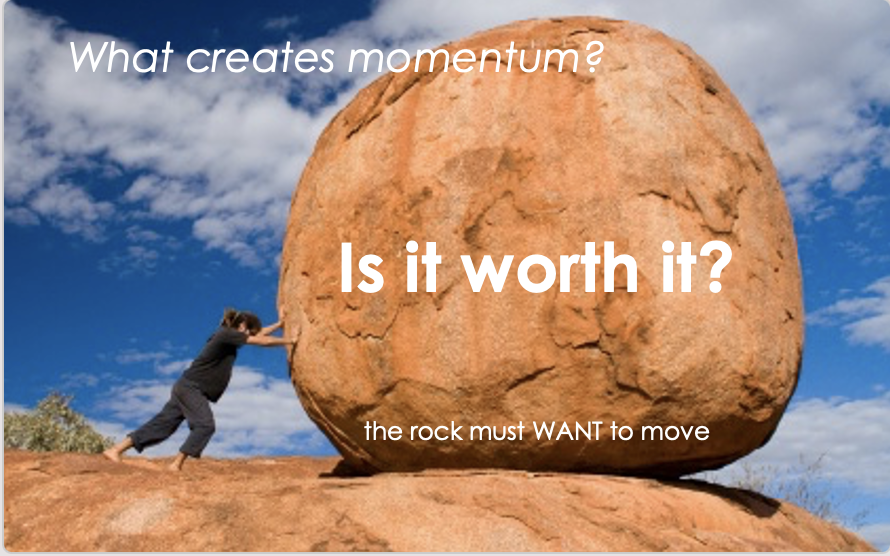
Once 100% of the audience is aware of the change and the urgent, compelling need for change _ so that yes its worth all the hard work – we can start engaging with people to believe in this plan for change. Here we stop doing unnecessary (or less necessary) things to free up mental and physical capacity. At the same time we also fill the capability gaps in the team- with knowledge, skills and needed resources. All the while identifying how we can create some momentum for change – by say building a coalition of networked influencers, or running a successful pilot program, or telling success stories. All of these aim to maintain the leaders credibility – with a reputation for doing the right things at the right time – as well as building momentum for change.
Once we have belief, we can engage with people to commit to change. How can we do this?By rearranging those previously rigid processes, KPIs, SOPs, providing intrinsic and extrinsic motivation to reflect the change… all the while reminding people of the necessity to complete the change process. At this stage a clear understanding of the nature of the wider business environment is necessary. Is your industry stable enough for go back to more rigid approach or is a more agile flexible approach necessary- and so reflect this in how you will engage people to commit to the new business you are creating.
Here’s a very simple model of this approach.

Subsequently, I have created and curated a range of tools to assist leaders navigate their way through this process. The tools and their use are to be selected based on the phase of the process the team or organisation is in as well as understanding the particular needs of the organisation.
An example of one such tool is the “awareness forcefield”, which enables change leaders to empathise with their team, to understand the benefits and barriers to the initial ideas of the leader and for the leader to marshal relevant data from their team to identify the positive forces (benefits) as well as any potentially resistive forces (barriers).
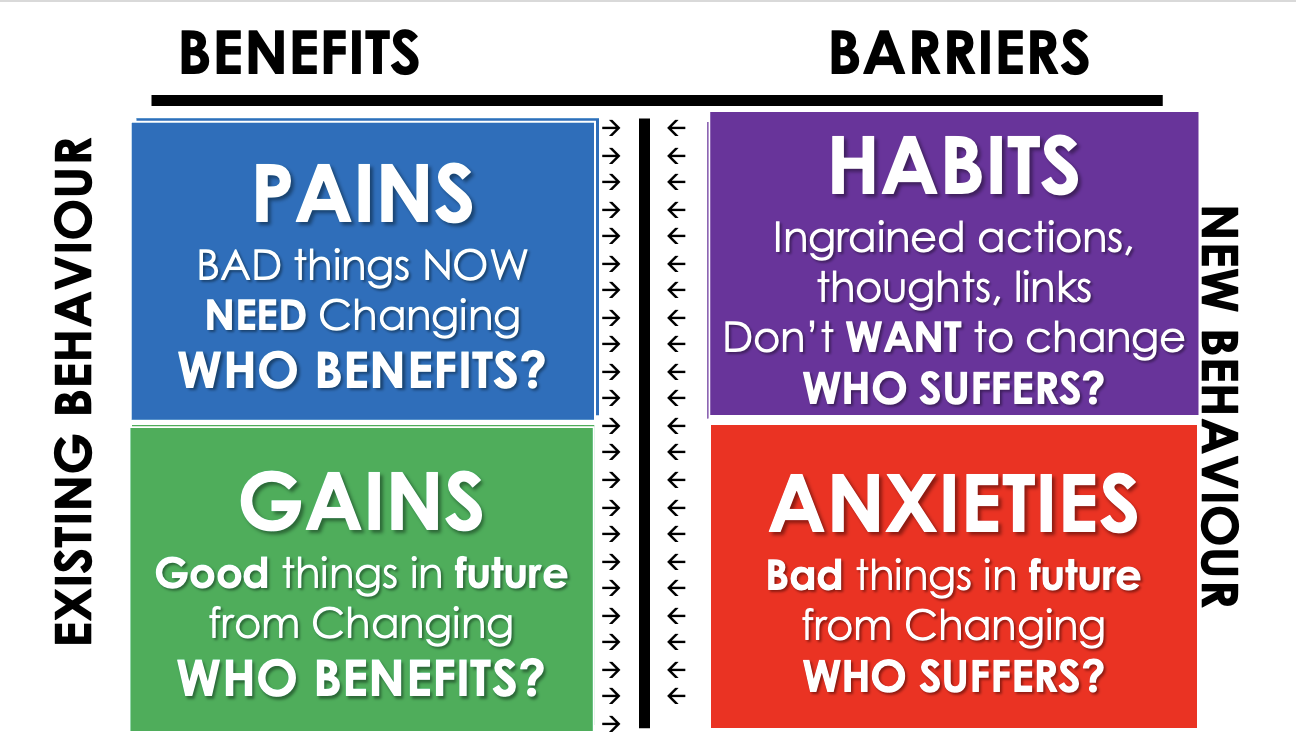
I have found this particularly useful as an empathy prompt for change leaders to reassess their initial views on their change plans. By empathizing and looking at change from your teams perspective you are then able to work with the team to envision how the desired outcome can be achieve in a way that maximizes the benefits to all while minimizing barriers and resistance to change. From here, this tool clearly assists in understanding the capability gaps that you can equip team members to overcome as well as anxieties that can be addressed in the subsequent planning.
If you would like to understand other elements of change please either connect with me to work with SMU Executive Development Email: exd@smu.edu.sg and either attend or arrange an Executive Development session on change management
FREE STUFF – When I facilitate learning about change I utilize a toolbox of 23 different change tools, but there are a range of tools from websites such as
https://www.sessionlab.com/library
http://www.triz40.com/TRIZ_GB.php
https://www.influencepeople.biz/tag/influence-people
https://www.agilecoach.net/index.php/coach-tools/
https://workshopbank.com
Thank you for reading about my thoughts on change. This was going to form part of a book, but I don’t think I have enough for something that lengthy, without introducing the just-so stories that accompany many management tomes. Let’s leave it as a blog post.
Additionally, I love engaging teams about change and implementation and I have found my simple three step approach really resonates as it moves beyond the complexity of change into something that can be easily understood and acts as a practical guide.