
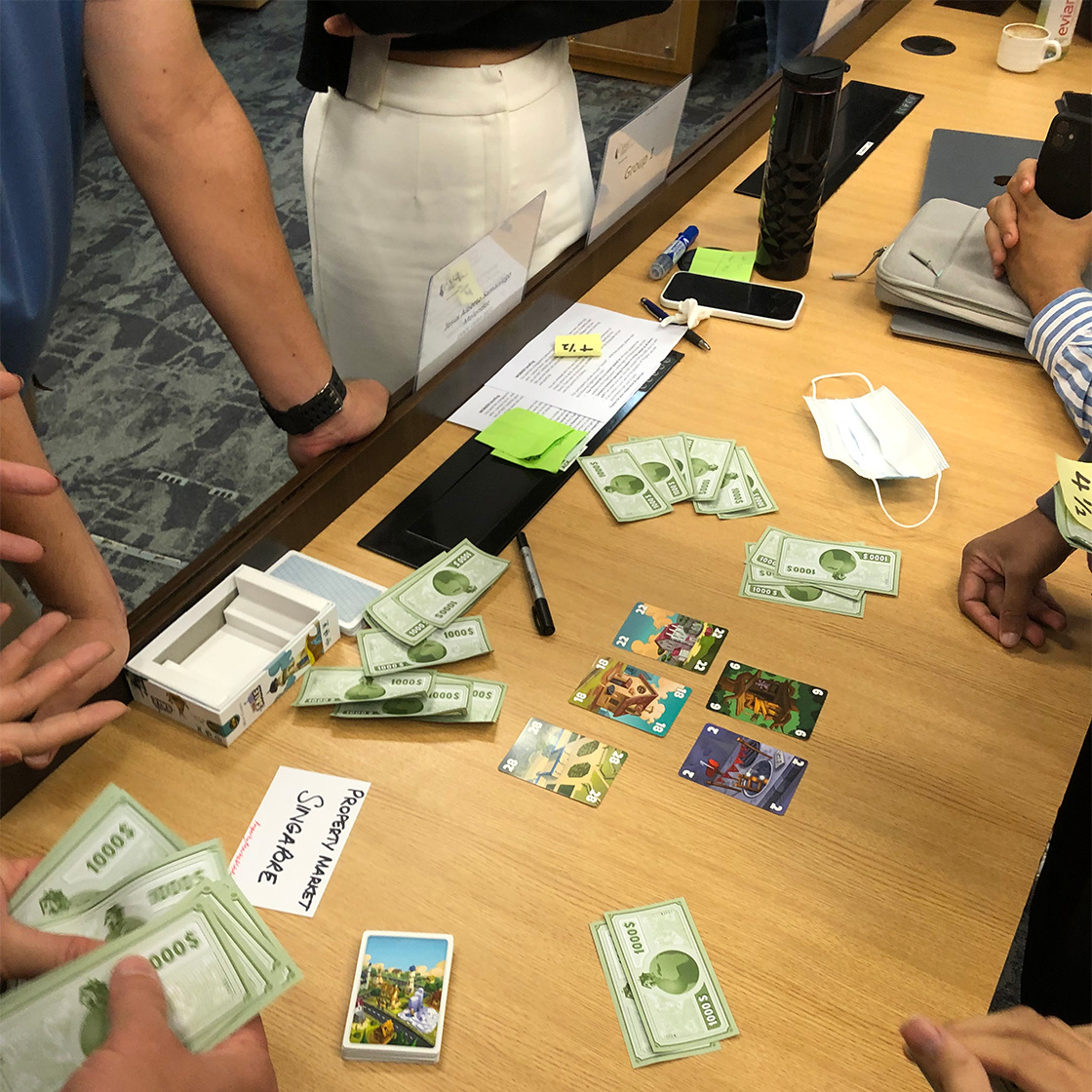
The concept of adult education, or andragogy, is continuously evolving, reflecting the dynamic interplay between relevance, emotion, and stress levels in learning experiences. The book “Make It Stick” and similar theories underscore the importance of these variables, suggesting that optimal learning occurs when content is not just relevant but also emotionally engaging and mildly stressful. In this vein, experiential learning and learning through games emerge as powerful modalities.
The Triad of Effective Learning: Relevance, Emotion, and Stress
- Relevance: The adult learner is often driven by the immediate applicability of new skills or knowledge, and relevance serves as a form of intrinsic motivation. Relevance and Timing: In adult education, the notion of relevance extends beyond mere applicability to also encompass the timing of the learning experience. Adult learners derive maximum benefit and intrinsic motivation when new skills or knowledge can be immediately deployed in real-world situations, especially at a juncture when those skills are most needed. This timely alignment not only enhances engagement but also fosters quick implementation and rapid adaptation to evolving challenges.
- Emotion: Emotional engagement—whether through joy, intrigue, or even a degree of frustration—heightens attention and retention.
- Stress: This element adds an adaptive challenge, tapping into the Yerkes-Dodson law that indicates a moderate level of stress can enhance performance.
Experiential Learning: Hands-On, Minds-On
Experiential learning, often summarized by the Kolb Cycle of experiencing, reflecting, thinking, and acting, embodies the triad effectively. It provides:
- Real-world relevance by mimicking situations learners will encounter.
- Emotional connection through hands-on engagement.
- Stressful scenarios that are manageable but challenge the learner’s comfort zone.
Game-Based Learning: The Power of Play
Game-based learning is particularly effective in the context of andragogy due to its alignment with adult learning principles laid out by Knowles in “The Adult Learner”. These principles, such as the need for self-direction, the readiness to learn, and the orientation to learn, find a natural fit in game-based environments.
Enhancing the Quality of Learning
- Relevance: Games can be designed to simulate real-world scenarios. This aligns well with the adult learner’s need for directly applicable skills.
- Immediate Feedback: Game-based environments usually offer immediate feedback, enabling quick iteration and improvement—a process similar to the experiential learning cycle by Kolb.
- Safe Space to Fail: Games offer a risk-free environment where learners can fail safely, thereby improving their understanding and performance in a stress-managed manner.
Augmenting the Quantity of Learning
- Engagement: The competitive or collaborative aspects of games increase engagement, and according to Prensky’s “Digital Game-Based Learning,” more engaged learners are likely to invest more time in learning.
- Retention: As “Make It Stick” suggests, the emotional engagement in games can significantly improve memory retention, thereby increasing the quantity of information that sticks.
- Speed of Skill Acquisition: Given the immediate feedback and repetitive nature of games, skills are often acquired more quickly, fulfilling the ‘effortful learning’ criteria by offering just the right level of challenge.
Desirable Difficulties
Game-based learning can also incorporate ‘desirable difficulties,’ a concept from Bjork’s research. By integrating challenges and setbacks within the game design, learners are required to exert more cognitive effort, thus enhancing both the quality and quantity of learning. The concept is discussed in “Make It Stick” which posits that learning should not be easy. Incorporating challenges that make learners exert effort enhances long-term retention and application. Both experiential and game-based learning can be designed to include such difficulties, like time constraints or complex problem-solving.
The principle of ‘effortful learning’ also aligns well with these teaching methodologies. According to this principle, the more mental sweat it takes to learn a concept, the more robustly it is learned. Tasks that are neither too easy nor too difficult—but just challenging enough—encourage this kind of beneficial struggle.
Conclusion
In the realm of andragogy, the triad of immediate relevance, emotion-creating experiences, and mild stress can significantly enhance the learning process. Experiential learning and learning through games naturally incorporate these elements, making them highly effective strategies. By further understanding and applying concepts like ‘Desirable Difficulties’ and ‘Effortful Learning,’ educators can optimize these approaches to produce robust, long-lasting learning outcomes
- Bjork, Elizabeth Ligon, and Robert A. Bjork. “Making Things Hard on Yourself, But in a Good Way: Creating Desirable Difficulties to Enhance Learning.” Psychology and the Real World: Essays Illustrating Fundamental Contributions to Society, 2011.
- Brown, Peter C., Roediger, Henry L., McDaniel, Mark A. “Make It Stick: The Science of Successful Learning.” Belknap Press, 2014.
- Ericsson, K. Anders, Ralf T. Krampe, and Clemens Tesch-Römer. “The Role of Deliberate Practice in the Acquisition of Expert Performance.” Psychological Review, 1993.
- Knowles, Malcolm S. “The Adult Learner: A Neglected Species.” Houston, TX: Gulf Publishing, 1973.
- Kolb, David A. “Experiential Learning: Experience as the Source of Learning and Development.” Prentice-Hall, 1984.
- Prensky, Marc. “Digital Game-Based Learning.” Paragon House, 2007.
- Yerkes, Robert M., and John D. Dodson. “The Relation of Strength of Stimulus to Rapidity of Habit‐Formation.” Journal of Comparative Neurology and Psychology, 1908.