

Selling is easy… buying is hard; and the more people involved the harder it gets- thats why i love Gartner’s new improved buying process (pictures).
My career has been as a sales person; and I’ve spent a life time engaging and persuading … selling. And now i realise i had it all wrong; my role should have been helping customers bridge three key gaps preventing them from buying.
Heres a little research to back this up. My favoured sales consultancy Gartner found, “77% of buyers rated their purchase experience as extremely complex or difficult.”
How helpful are you to your potential clients as they attempt to buy? What gaps prevent them from buying and how can you enable buyers to buy? I’ll go through both the reasons why buying is tough (this post) and how by becoming a trusted advisor you can address buying group decision making gaps (next post).
Gone are the days of my youth where buyers would love to speak with you (Sales Representative) or pick up the phone to learn every detail of a solution from a you, today with the rise in internet and the online world, your clients are potentially more aware of what solutions are available and what is trending in the market than you – with your focus squarely on your business .
So the question is how should you sell in this new self-service digitally enabled buying process?
This is precisely why the need for buyer enablement appears. Buyer enablement is an efficient and quick solution for businesses looking to increase their sales, conversion rates and business growth in a healthier manner.
The core of this idea is that in our digitally enabled world there is so much information available AND risk involved in purchasing project solutions that non-expert buyers tie themselves in knots becoming aware what their problem is, believing there is a potential solution, committing to the solution despite the risk. I worked with a billion dollar heating and cooling client but who’s business represented less than 3% of new-build costs. No wonder potential clients often chose an inappropriate cheap solutions when they had other bigger more pressing priorities to work on.
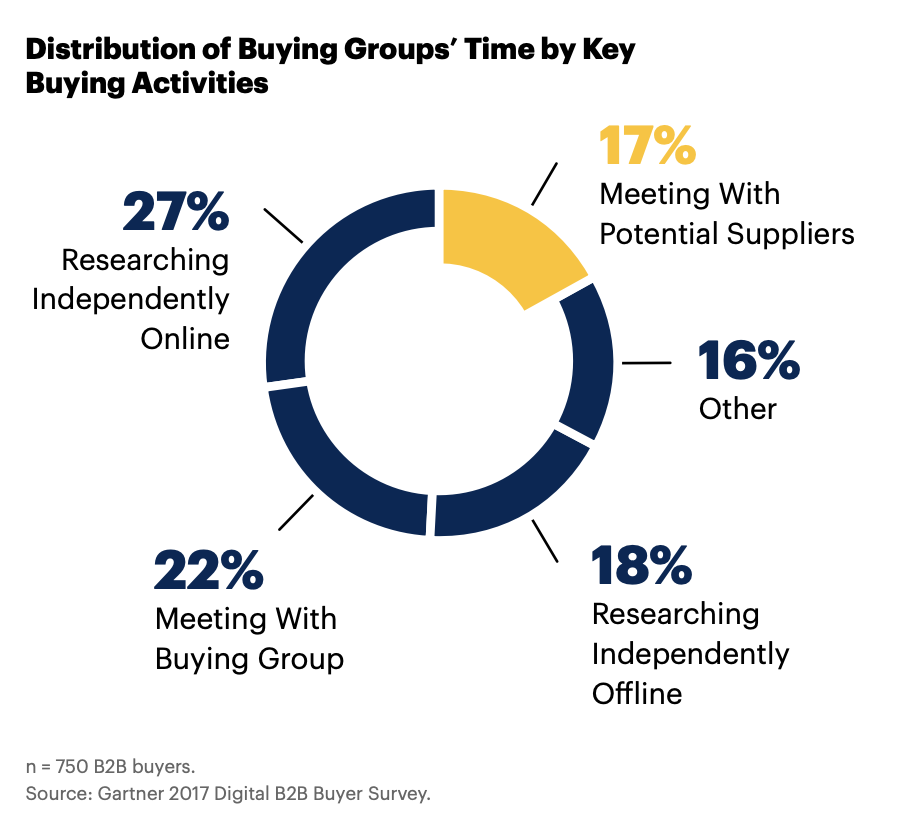
Gartner’s research pre-covid was that buying groups spent 4 times more time researching solutions on their own than connecting with the real experts, their trusted suppliers. To provide clients with greater value across the purchase process‚ we first need to recognise just how different buying has become. Within that new reality‚ they must address what customers actually need to complete a purchase to their satisfaction and‚ as a result‚ how to equip their buyers differently to succeed.
Let’s understand this with an example:
Often times, when you chat with client’s you realise they have problems they don’t even know they have- they just live with inconveniences not knowing there are potential solutions. here is where you can make clients aware- aware that unknown problems can be solved. Subsequently, when your client is researching purchasing a solution, there intent is to gather as much information as they can online to try to become the expert prior to identifying a solution.. Since they now have more information in hand than they need or can easily process, they are confused as to how they can move forward and make the right choices. Here your role is to make them aware of potential solutions and marshal the support to enable them to believe in a solution.
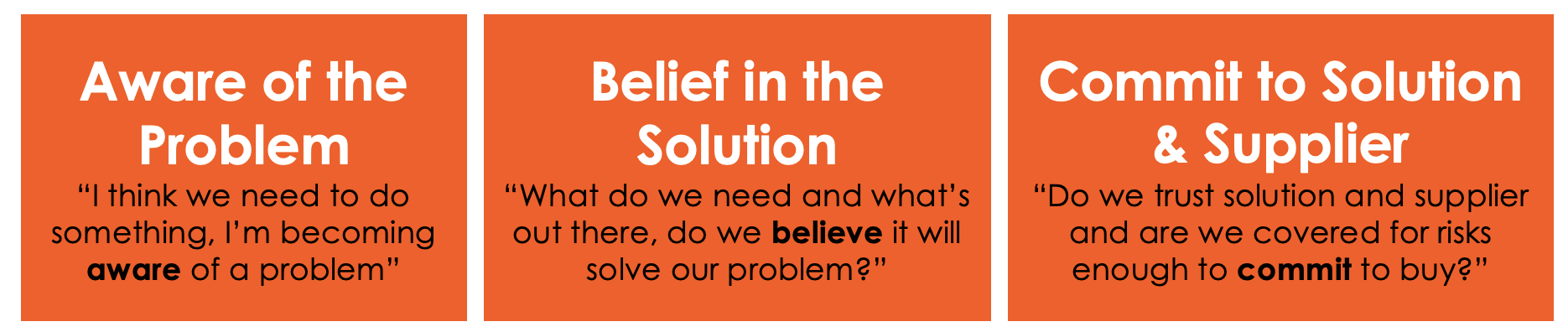
Aware-Believe-Commit- is my ABC of buyer enablement and the purpose of this approach is to provide clients with the necessary guidance to make great decisions in a way that’s relevant to their needs, understandable, and supporting their critical buying role.
Why Does Buyer Enablement Matter?
Buyer enablement is the process of assisting a client even before they identify a solution until a solution has been successfully integrated into the business to select the best solution for their specific problem.
Many in sales believe that only when a client is keen on purchasing a solution that the come in to provide sales assistance. when, in fact, even before thinking about purchasing, clients need assistance identifying and prioritising potential business solutions.
Secondly there is a conviction that all is necessary to win a sale is convince a singular buyer. While in real life almost all purchasing (and all big ticket buying is done by a formal or informal group). Thus buyer enablement is identifying and catering to the interests of the others who are also a part of making buying decisions.
Buyer enablement means looking at the buying process from the Clients perspective to understand the reality of h decision process. here is where i love Gartner’s great process map of buying decisions.

Apart from the client engaging with you the other members of the buying process will also conduct their independent research and will present often different, conflicting, data to make a decision on which solution is ideal for them based on the slice of information they hold. The drawback here is since every person has data in hand it becomes tougher to decide on one best solution.
Further from Gartner, suggests in buying groups that there is a significant over abundance of high-quality information. There are typically 6 to 10 stakeholders in a buying group, and each has consulted four to five sources of information. The Group must then identify how to deconflict this information together. With 95% of buying groups report having to go back and revisit decisions at least once as new information emerge.
Further research from CEB has identified that as the buying decision group size increases, the incidence of buying decreases;

A Buyer enablement approach allows firms like yours to frame discussions and present content that can guide the buying group to take the action of investing in your solution with ease and clarity.
Understanding this, it’s time to get back on track and learn how buyer enablement is the right solution for you.
Let’s begin with the thought process steps from a client perspective .
1. Aware
The main purpose of stage one of the process is to ascertain and enable clients to become aware of unseen opportunities: to identify real problems and introduce potential solutions. Take time to study and identify the principle cause of the problem so that capturing the right solution becomes much easier.
For a client, a solution is required because they are now aware of a need for it. There are typically many different potential solutions available for their need but not every solution will match the requirements to deliver the best outcomes. Here is when a key problem arises; to solve this problem, it is important to ensure clients are made aware of a solution that matches all the needs of all key decision makers within the client buying group.
Having been made aware that they have a problem, the clients next thought process should be to clearly identify what expectations members of their team have from the anticipated solution. This sets up the search for appropriate solutions. For instance, if a client is looking to access information online without any risks attached, what are the possible solutions available for them to conduct such an action. For a client finding the right solution becomes easy when a firm like yours lays it out for them in an efficient manner.
2. Belief
Once made aware of problem and potential solutions, the clients next step is to believe the solution will work and solution provider can and will deliver on client expectations.
The ultimate agenda of a client should be to invest in a solution that is ideal for business growth and can help to nurture the business over time. Clients typically construct a long list of potential needs and seek to ensure that the solution they purchase meets their requirements. often, this list grows and grows. This presents a risk- will the identified solution sustainably work and address all expectations?
Identifying why a solution provider could be the right one is important because there are thousands of suppliers available all selling potential solutions which may satisfy all or some of the needs of the client. With so many options, a client must believe in both a solution and a supplier that can effectively cater to all the expected requirements desired.
The only way a client can theoretically make the right choice is when the buying team is able to analyse and evaluate the choices in a comparable way. But how can the group do this?
3. Commit
Now it is necessary to get the attention and approval of all of the decision makers to the recommended solution. Here, two key risks present themselves. The first is operational risk- can the firm actually integrate the solution into their business. Secondly, financial risk – with the choice of so many different potential options and added services does the final recommendation make financial sense.
Although these three jobs in our buying journey occur in every buying interaction‚ the way
in which customers progress from the starting point to a purchase is unpredictable‚ inconsistent and sometimes repetitive. A better depiction of a B2B buying journey is likely to look like a disordered web rather than a straight line. Again, Gartner suggests that 90% of all buyers reported revisiting‚ or looping back‚ to at least one job as part of their overall purchasing process.
While I may describe buying as a three part process, each job is a series of tasks to be completed to move in. Additionally, as we’ll see in the next post, it’s important that sellers realise surrounding the buying decision are two further roles – creating consensus and alignment within the group and continuous validation of problem, solution and supplier.
In understanding buyer enablement cycle from a clients standpoint two things emerge. Firstly, selling – the way it’s been practiced in the past – is no longer useful. Secondly it is now evident that addressing the challenges within each of the three stages will enhance effectiveness but also will require newer tools to enable buyers to buy . So it is a wise seller who curates an effective plan to continue the journey on the right route… and thats the topic of our next post.