
Last week I outlined a rationale for effectively implementing change within your organisation.
This week I’ll review the formal frameworks you could select to underpin and support that change… we’ve talked about what and why… now here’s how.
Typically, people apply a change model. I have 8 of these (including Kotter’s eight step change model) later. But consistent research shows that most change programs fail to achieve their desired results (Kotter 1978, 1996, 2007; McKinsey 2008, 2015; Anand & Barsoux 2018) So repeated surveys show that change more often than not fails… here’s my explanation.
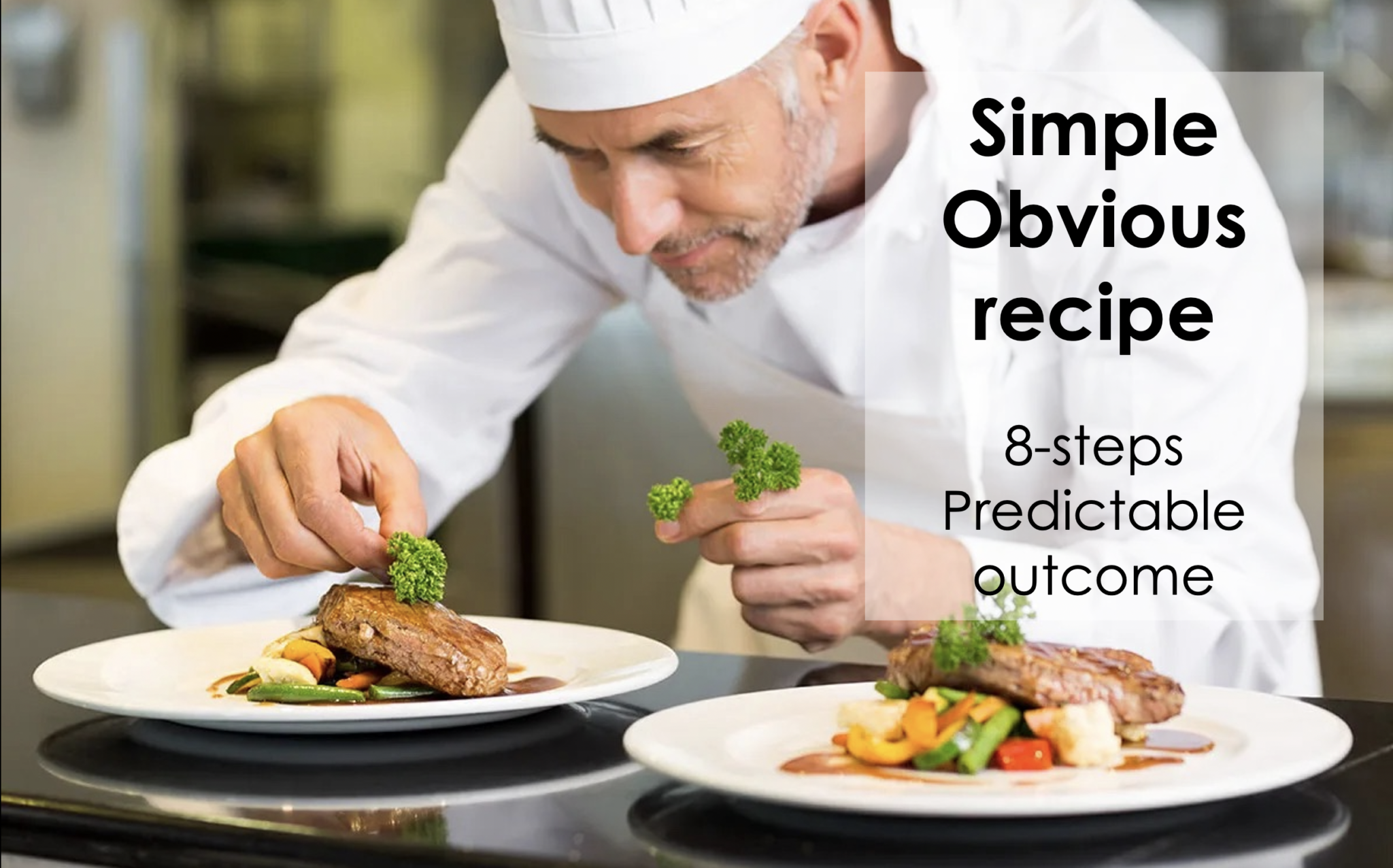
Initially change was seen as a Simple Obvious recipe. It was a three step or an 8-step linear process with simple instructions. Follow the recipe and create predictable outcomes. Change is baking a cake… except the cake rarely rose.
With the advent of management consultants like McKinsey and Posci, change was reborn as a Complicated Process. It needed to take into consideration many factors that would impact the result. It needed greater structure and to work it must affect relations within the organisation. Experts were necessary to assist implement the process. Their role was to there to develop the plan and co-ordinate with management. They provided many sets of instructions to achieve a specified outcome and then departed the scene. But in the end by using this complex approach there was a predictable outcome- change tended to rail still. Change was seen like sending a rocket to the moon- complicated but able to be broken into many individual steps, to be overseen by experts. Except that sometimes, most times, the rocket didn’t want to go. The organisation didn’t want to change
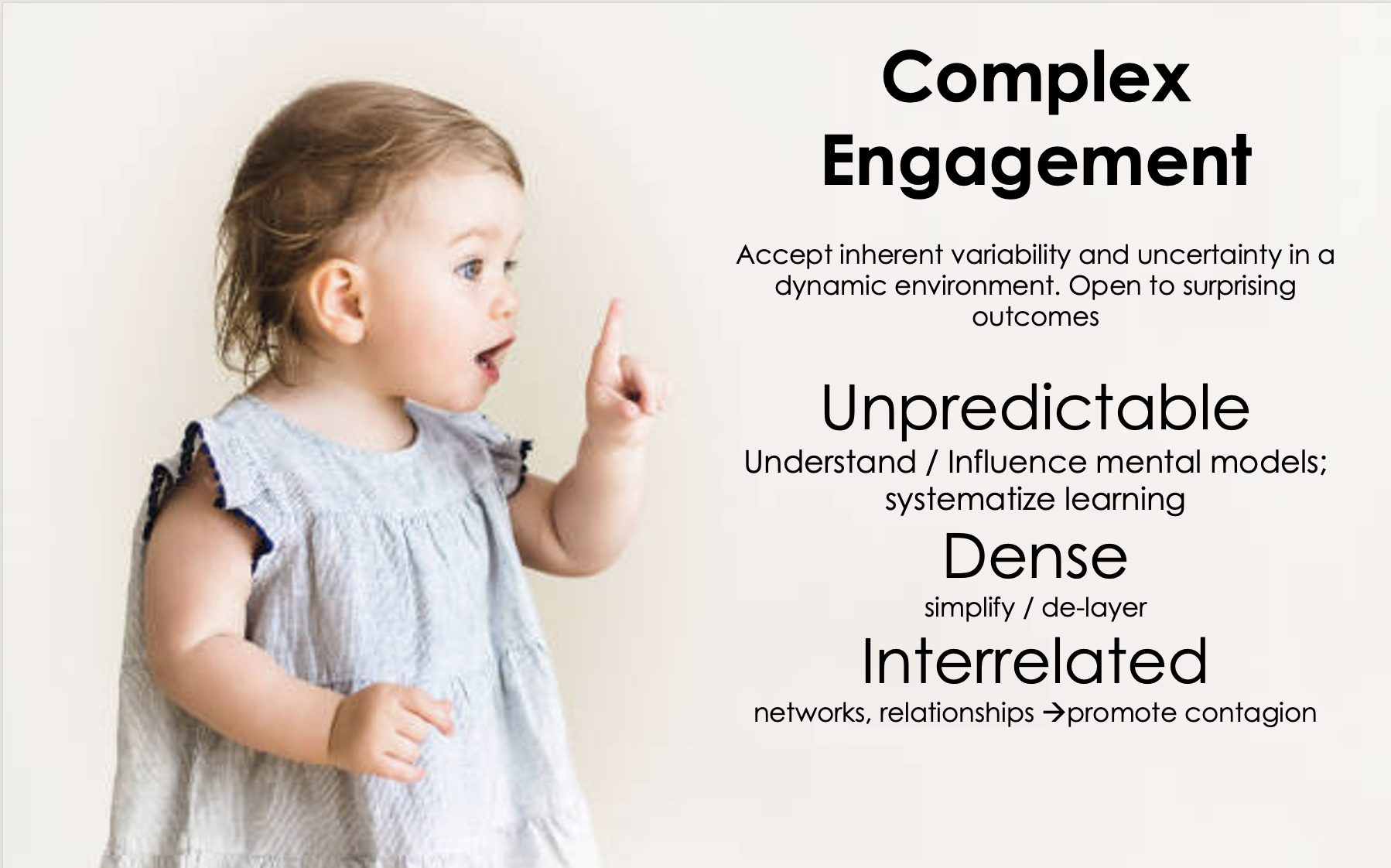
Change is like RAISING a BABY
For me, change is a Complex Engagement, akin to raising a baby. We must accept the inherent variability and uncertainty of a dynamic environment. People can change their views of the project and then quite simply change back- its not a linear process. We have to be engaged with our people and open to surprising outcomes- much like raising a child. And just like raising children, the object of your change – the team- has as much say in the process and you do. This change is unpredictable. We need to be aware of and understand how we can formally and informally influence people within the team. We must equally be open to their influencing us. Aware also of the prevailing mental models within the team and seek to understand and influence those to recreate a new model for the firm. As part of this exploration we need to become aware of and respond to peoples anxieties and habits and pains, as well as seek our own gains. It’s complex, so we need to simplify and delayer and involve early. Understand the interrelated nature of relationships within the firm and seek to use these to promote contagion. I like to use this metaphor, Change is so difficult it’s like raising a child.
Before we even think about change, we need a clear understanding of the current state of our team members. We need to recognize that they have spent years perfecting and embedding the current processes, and procedures, KPIs and incentives to ensure the current approach works well and is efficient. Change will destroy this certainly and thats why most people resist change, because change is disruptive to the business (affecting resources, processes, tried-and-tested methods) change is disruptive of the team (breaking established relationships, networks and power links) and change disrupts the individual (skills, knowledge, links). And if managed badly, change can be seen as a “black box” as few know whats going on, why and what the future impact really will be. So before you even start implementing change there is a mountain of anxiety and habit to influence, before we even get to the new behaviours sought.
Thus, Having a mental model of ‘changing’ is vital
Without a mental model to lead you, change agents don’t stand a chance of being able to consistently conceive any changes made in your organization as you seek to raise this ‘baby’.
Unless you hold a solid mental model for for assessing and then deploying your changes, you won’t know what information you need to focus on at each stage of the change to know how to improve your business.
Before we go any further, I believe there are three critical responses that need to be addressed in any change or implementation project.
- “I don’t get it”; there is a mutual lack of awareness and clarity around the project, an ambiguity surrounding the project and process
- “I can’t do it”, there are barriers to change and a lack of belief that the solution can work
- “I don’t want it”, there is a lack of willingness to commit to change
To address this condition, here’s my mental model to address these three responses… its very simple

I believe to engage with a change audience we need three stages, mirroring Lewin’s model later in this piece. In phase 1, as people “don’t get it” we seek to create awareness.
Awareness of our personal credibility to engage with change – because this is an area of real ambiguity, and awareness of the motivations and concerns of our change targets which are equally ambiguous.
On the topic of self-awareness, its essential to know how are we seen by our team members peers, bosses. Have we the capability to implement change? Are we trusted? Without this initial stage of credibility, change fails before we even start. The reason this is important is that change is DISRUPTIVE, and only credible leaders can positively disrupt organisations.
Then we need to become aware of the capability and capacity to change of our team. Can they engage with change? Will they? Have they the time within their busy lives to consider change or are we overwhelming them. We need to spend time making ourselves aware of the challenges our team members face to enable us to link our approach to their needs and desires. At the same time, we are making our team members aware of the urgency and importance of this change program.
The reason for this process is that SUCCESSFUL organisations have powerful antibodies against change – core rigidities that enable them to become highly efficient. Things like processes and SOPs, KPIs and incentives, ISO certifications, and formal and informal power networks. All these create a successful inertia that inoculate organisations against change. If you’re going to go against these it will be disruptive and you will need credibility.
Once 100% of the audience is aware of the importance of change and the urgent, compelling need for change – so that yes its worth all the hard work – we can start engaging with people to break down the barriers to change and believe in this plan. Here we engage with our team to identify what barriers they have. What are the things we must stop doing. Identify the unnecessary (or less necessary) projects to enable us to free up mental and physical capacity. At the same time we also fill the capability gaps in the team- with knowledge, skills and needed resources. All the while identifying how we can create some momentum for change – by say building a coalition of networked influencers, or running a successful pilot program, or telling success stories. All of these aim to maintain the leaders credibility – with a reputation for doing the right things at the right time – as well as building momentum for change.
Once we have belief, we can engage with people to commit to change, and assist them change in a willing way. How can we do this? By being fair to all. Assess the fair allocation of resources within the whole team to ensure they can achieve their new, goals. Assess the process fairness ensuing that all have been listened to and have made their case as cogently as practical. Ensure outcome fairness where everyone has the opportunity to contribute to the outcome. Use your social capital, built in the preceding period- the trust and credibility to support change – to ensure that all are heard and seen. Use the teams skills to rearrange previously rigid processes, KPIs, SOPs, providing intrinsic (and extrinsic) motivation to reflect the change… all the while reminding people of the necessity to complete the change process to capture promised gains and solve their pains.
Pause here, before making rigid the changed processes. Assess the nature of your business environment. Is your industry stable enough for a rigidity of processes or are you in a changeable, unpredictable environment, where an agile and flexible approach is necessary. Reflect these environmental influences in how you will engage people to commit to the new business you are creating- fixed or flexible.
Here’s a very simple model of this approach;
Subsequently, I have created a range of tools to assist leaders navigate their way through this process. But the tools and their use are to be selected based on the organisation.
A quick change management method overview
OK, now we can move onto documented processes Documented processes benefit businesses of literally any size (and even personal tasks) by giving a repeatable set of instructions which provide a set standard of quality. You need to have a set framework to follow if you want to have any kind of consistency. Beyond that, you can only track and measure your success if you’re consistent, and you can only reliably improve if you can track your success.
In short, unless you use a set method for deploying your changes, you won’t be able to collect enough information to know how to improve your business.
Many others do not see change this way, in fact, typically most change is seen as a process. I don’t have room to go through each change management method in depth. Instead, I’ll be publishing a second post a little further down the line which will be entirely dedicated to the various methods, their effect on your change management strategy, and when they should be used in general.
For now, a brief overview of the eight methods are as follows:
- Lewin’s change management model
- McKinsey’s 7-S model
- Kotter’s theory
- Nudge theory
- The ADKAR model
- Bridges’ transition model
- Kubler-Ross’ change curve
- The Satir change model
Lewin’s change management model

Each change management method follows the principles laid out above, but Lewin takes a deeper view on the need for change. His theory is that you need to “unfreeze” the entire way that things are done, make your changes, then “refreeze” to lock the new model into your company’s mindset.
Although Lewin’s method isn’t too useful for minor changes, if a serious overhaul to one of your systems or core pieces of technology is required then this is a fantastic way to dig up everything that could be affected.
Personally, this is the simplest approach to the overall management of change as its simple to communicate and understand.
McKinsey’s 7-S model
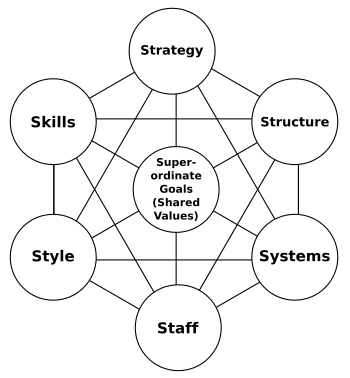
McKinsey’s 7-S model highlights seven core areas which are interlinked and must be considered with every change: strategy, structure, systems, shared values, style, staff, and skills. Much like Lewin, this a good model to use when you’re trying to cover every part of your company that your change affects, especially if you want to focus on your employees and how to get them to adopt it.
I personally don’t use this approach as it describes change well it doesn’t help people implement or move. It tells you want you need to think about, but hacks a dynamism to implement change successfully. It need to be used with Lewin or Kotter.
Kotter’s theory

Kotter takes a much more human-centric approach, with an 8-step method to inspire initial action by explaining the need for change, then guiding it through by keeping up that momentum.
In essence, you meet with the key figures affected by your change, create a sense of urgency by teaching them why it’s important and what the benefits are, then use short-term goals to keep up the enthusiasm for the change. After all, it’s easy to start a project, but unless you’re getting a steady drip feed of positive feedback it can be difficult to see it through to the end.
This is the standard approach to implementing change and creating a change plan.
Nudge theory

While the previous methods are highly structured, the so-called “nudge” theory takes a slower, more passive role in bringing about change to avoid alienating people with massive sudden shifts. This is done by gently suggesting or coaxing employees to move in the right direction rather than directly instructing them what to do, with the idea that they will consider the eventual changes to be their own idea and have a greater drive to see them through.
While it’s a little vague and difficult to employ (and some would even say manipulative), the idea of letting your employees grow and have an active role in changing your business for the better is a great way to make them more loyal, as they can see their input being deployed directly.
The ADKAR model

ADKAR pays more attention to the individual, with its five-element form-like structure serving best as a kind of questionnaire you can hand out to your team to gather feedback and assess how effective your changes were. As you’d expect, this is a great way to gather feedback on your changes to alter how you do things in future (but not necessarily plan in advance).
There’s nothing stopping you from using the model to plan out your changes, but the vague nature of each step leaves it a little lacking compared to some other models, hence why it’s best used to gather feedback.
Bridges’ transition model
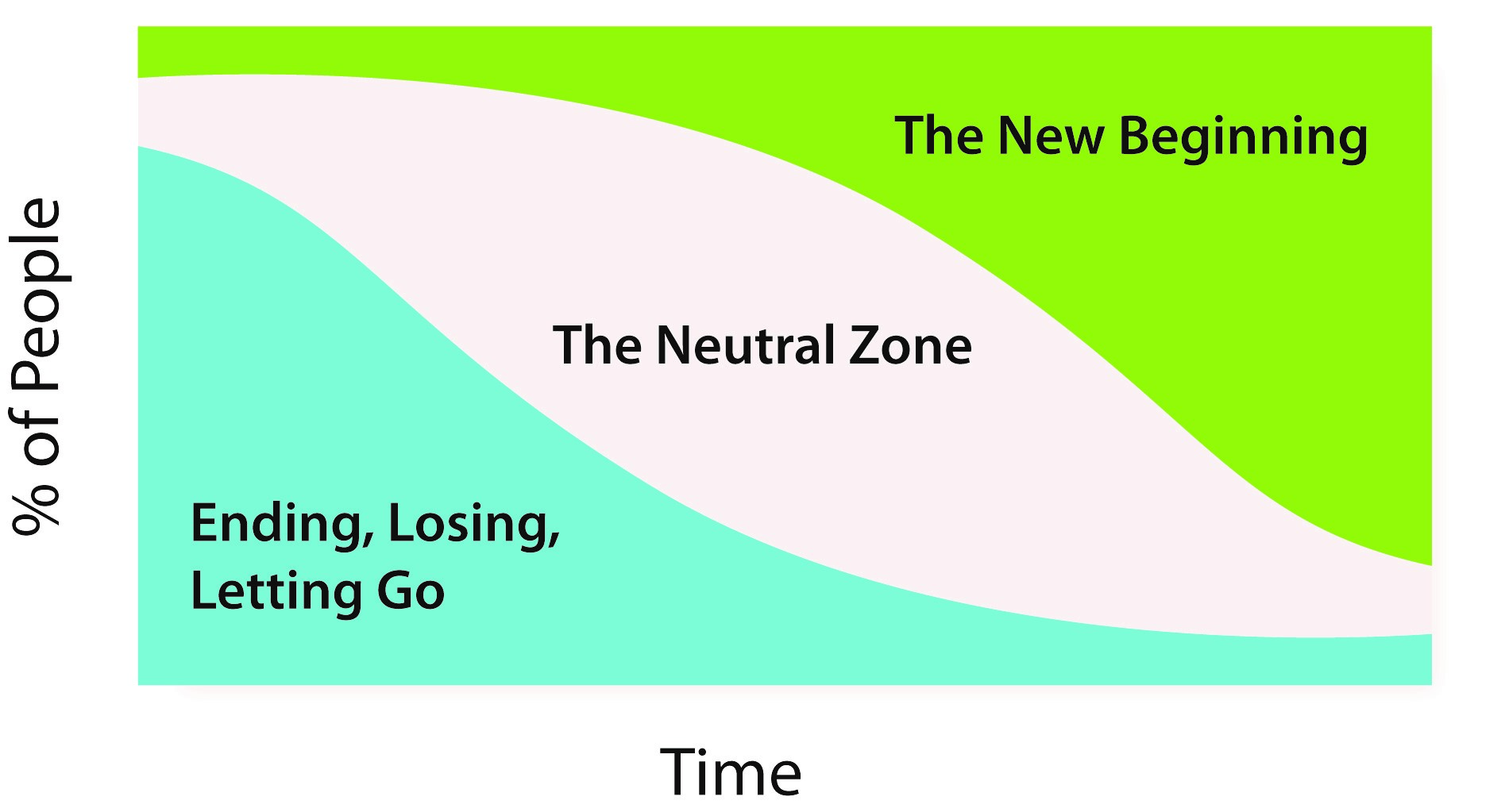
Bridges’ transition model dives into your team’s emotional reactions and uses those to cement the results. By separating the reaction that most people feel when faced with change into three stages (Ending, Losing, and Letting Go, The Neutral Zone, and The New Beginning), Bridges’ gives you a solid foundation to guide your employees through the various emotions that will likely accompany the change in order to let you effectively deploy them.
Kubler-Ross’ change curve
 Kubler-Ross’s change curve is also emotion-driven, but is inspired by the titular psychiatrist’s five stages of grief, and explains how to guide employees through times of upheaval. By identifying what stage of the process an employee is in, you can tailor a response to them to guide them through the rest of the process.
The model can also be used to roughly estimate the impact of a change on your employees and their productivity. The results won’t be 100% accurate, since everyone responds to changes differently, but you can at least try to manage your business around the potential impact so that you’re not taken off guard and unexpectedly set back.
The Satir change model

Finally, Virginia Satir’s change process is less of a “how-to” and more of an example of what your progress might look like upon making a change. Her model shows the general effect of a change on your performance, the ensuing chaos, and the resulting transformation to eventually reach a new height of productivity. This one’s great for tracking your changes, but also for predicting how long your productivity will be lower as a result of the change.
Having a change management strategy lets you control your future
Change management sounds like an imposing term, but as you’ve seen above, the majority of it is just taking a logical approach to the changes you make in your company and planning out what you’ll need to do as a result.
So by both encouraging change and increase employee adoption of those changes, companies can both adapt to the times and customer demands while accurately knowing how everything is handled. Again, humans are creatures of habit, and if there’s an easier way to carry out a seemingly complex task, chances are that the easy avenue will be taken.