
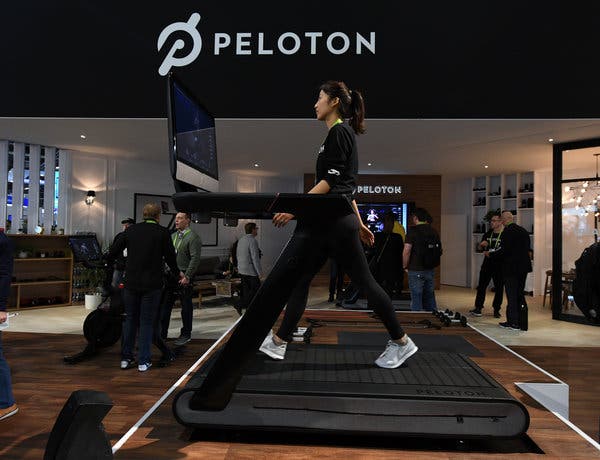
Tech companies command fantastic valuations and are routinely exempt from doing things that tired old-fashioned analog companies do- like make a profit, or make strategic sense.
But really, what is a tech company? Soon to IPO, WeWork and Peloton, don’t have much in common: one company rents empty buildings and converts them into office space, and the other sells home fitness equipment and streaming classes, both, though, claim to be tech companies.
Of course, it is fair to ask, “What isn’t a tech company?” Surely that is the endpoint of software eating the world. But to classify a company as a tech company simply because it utilizes software is simply wrong.
The world has seen IBM become the first company to have tech- but as it primarily sold hardware it wasn’t a “tech company”. Maybe Microsoft was the first- although selling CDs of software probably doesn’t make the cut. SalesForce.com could be a prime candidate as the first real tech company. But Salesforce held software on its own huge servers and customers accessed software from these… so extensive hardware was still involved.
Ben Thompson at stratechery postulates the first genuine tech company was Altassian. It sold Agile project management software just as the explosion of Agile as a development methodology commenced and offered software downloads from its website. Unlike Salesforces use of its own huge servers to power the software it was a tech company pure and simple- no hardware pure software & people.
What made Altassian a precursor Tech company was the combination of zero marginal costs ( distributing software online cost nothing) and zero transaction costs: thanks to the web and rudimentary payment processors it was possible for Atlassian to sell to companies without ever talking to them- all in-bound sales were self-serve.
This model, when combined with Salesforce’s cloud-based model (which Atlassian eventually moved to), is the foundation of today’s SaaS companies: customers can try out software with nothing more than an email address, and pay for it with nothing more than a credit card. This is also a characteristic of tech companies: free-to-try, easy-to-buy, by anyone, from anywhere.
Back to Real World
So what about companies like WeWork and Peloton ? Note the centrality of software in all of these characteristics:
- Software creates ecosystems.
- Software has zero marginal costs.
- Software improves over time.
- Software offers infinite leverage.
- Software enables zero transaction costs.
The question of whether companies are tech companies, then, depends on how much of their business is governed by software’s unique characteristics, and how much is limited by real world factors.
Thompson tests this idea by considering Netflix, a company that both competes with traditional television and movie companies yet is also considered a tech company:
- There is no real software-created ecosystem.
- Netflix shows are delivered at zero marginal costs without the need to pay distributors (although consumers bandwidth bills are significant).
- Netflix’s product improves over time.
- Netflix is able to serve the entire world because of software, giving them far more leverage than much of their competition.
- Netflix can transact with anyone with a self-serve model.
Netflix checks four of the five boxes.
What about Uber, it has crowed about being a tech-company, how does this test: it checks most of the same boxes:
- There is a software-created ecosystem of drivers and riders.
- Uber reports its revenue as if it has low marginal costs, but a holistic view of rides shows that the company pays drivers around 80 percent of total revenue; this isn’t a world of zero marginal costs. Worse it subsidised customers with $billions of incentives to use certainly more than zero marginal cost here.
- Uber’s platform (may) improves over time.
- Uber theoretically is able to serve the entire world, giving it maximum leverage. Although there is a need to have physical presence to generate both drivers & passengers
- Uber can transact with anyone with a self-serve model.
A major question about Uber concerns transaction costs: bringing and keeping drivers on the platform is very expensive. This doesn’t mean that Uber isn’t a tech company, but it does underscore the degree to which its model is dependent on factors that don’t have zero costs attached to them.

Now for the WeWork (see Thompson’s prior writing here and here):
- WeWork claims it has a software-created ecosystem that connect companies and employees across locations, but it is difficult to find evidence that this is a driving factor for WeWork’s business.
- WeWork pays a huge percentage of its revenue in rent- much more than zero marginal costs.
- WeWork’s offering certainly has the potential to improve over time; although left alone the physical offer will degrade with age requiring constant investment to keep it the same as now (cleaning, painting, repairs, maintenance).
- WeWork is limited by the number of locations it builds out.
- WeWork requires a consultation for even a one-person rental, and relies heavily on brokers for larger businesses.
Frankly, it is hard to see how WeWork is a tech company in any way, despite what it’s management says… it’s an office rental company plain & simple.
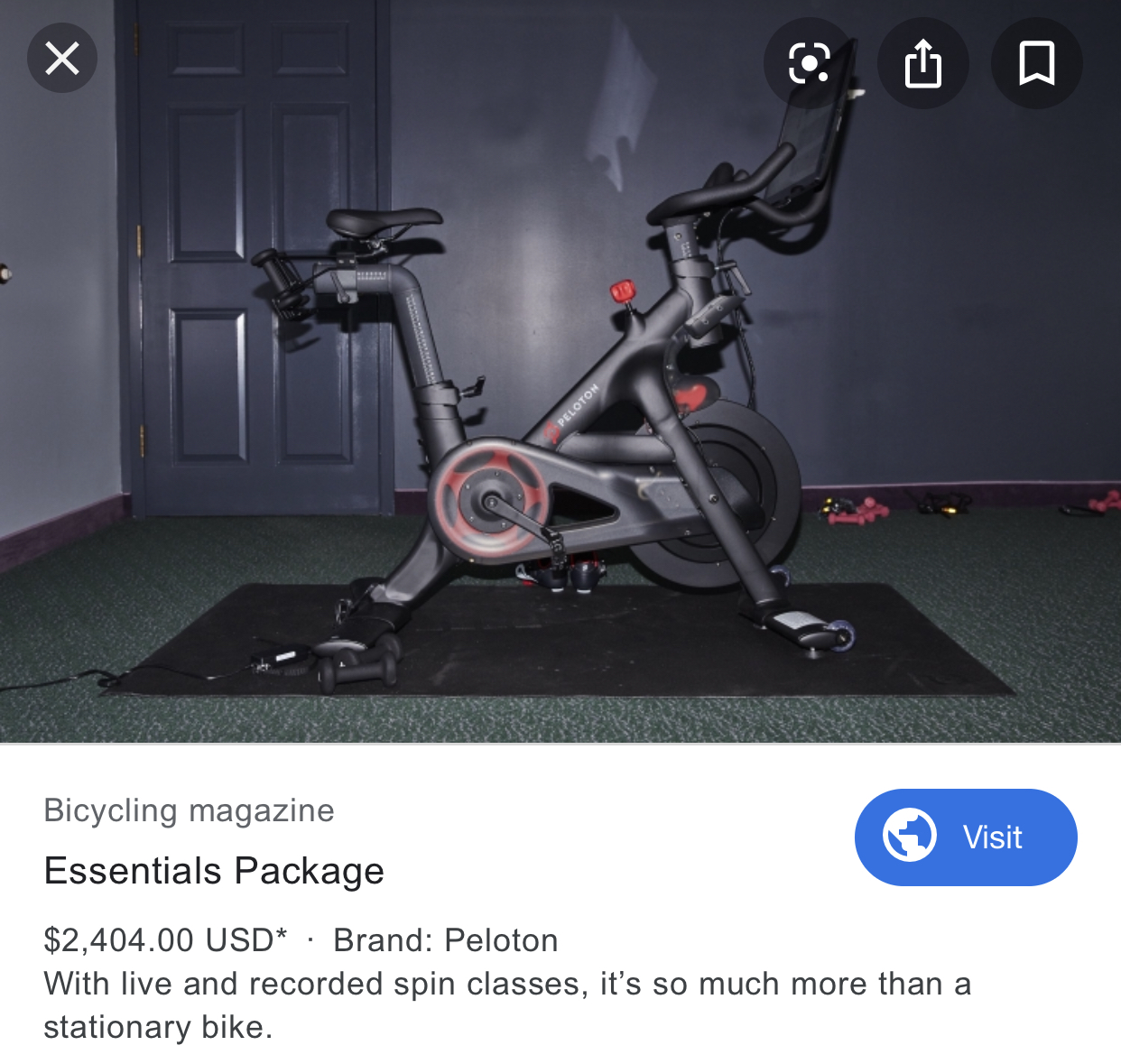
Finally Peloton (which Thompson wrote about here):
- Peloton does have social network-type qualities, as well as strong gamification.
- While Peloton is available as just an app, the full experience requires a four-figure investment in a bike or treadmill; that, needless to say, is not a zero marginal cost offering nor can you download it over the Internet. The service itself, though, maybe zero marginal cost. Depending on the rights for music and whether these are linked to subscription plans.
- Peloton’s product improves over time; although the hardware will need repairs & maintenance to use the system .
- The size, weight, and installation requirements for Peloton’s hardware mean the company is limited to the United States and the just-added United Kingdom and Germany. It may also be limited by music licencing agreements.
- Peloton has a high-touch installation process.
Peloton is also iffy as far these five factors go, but then again, so is Apple: software-differentiated hardware is in many respects its own category. And, there is one more definition that is worth highlighting.
Peloton could earn a “tech company” label for the following insight. Compared to spin classes at a dedicated gym, Peloton scales where gyms are instructor and space restricted. Sure, looking at a screen isn’t as good as being in the same room with an instructor and other cyclists, but it is massively more convenient and opens the market to a completely new customer base. Moreover, it scales in a way a gym never could: classes are held once and available forever on-demand; the company has not only digitized space but also time, thanks to technology. Infinite scalability provides a key element of technology.
So let’s refer back
- Software creates ecosystems.
- Software has zero marginal costs.
- Software improves over time.
- Software offers infinite leverage.
- Software enables zero transaction costs.
- Software enables infinite scalablility
This definition also applies to Netflix, and Uber; both digitized something essential to their customers (and derailed their competitors) it was time and trust respectively . WeWork hasn’t digitized anything valuable to make it indispensable to its customers or to set it apart from competitors. WeWork isn’t a tech company.
And, on the flipside, being a tech company does not guarantee success. The curse of tech companies is that while they ‘generate’ massive value, capturing that value and converting it to profit is extremely difficult. Here Peloton’s selling high-priced hardware is, like Apple selling iPhones or watches, a significant advantage. On the other hand, asset-lite models, like ride-sharing, are very attractive, but Uber will remain unable to capture sufficient value to make a profit. And should it start to force customers to pay the actual price of its service- lower cost co-operative taxi companies using generic tech paying Drivers a better share will be major disrupters.