

“A plan to influence others to act in your interests”

Let’s disrupt a crappy industry by cutting the fare, taking a 20% cut of it, persuading gullible Drivers to use their own cars and buy off the shelf tech to become a platform…
Let’s create a strategy that guarantees we’ll NEVER make money unless Government legislates our monopoly

How did it achieve such aims?
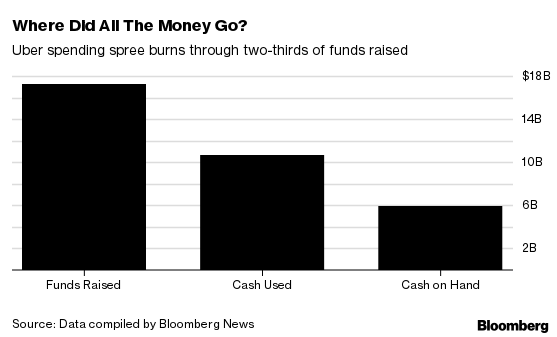
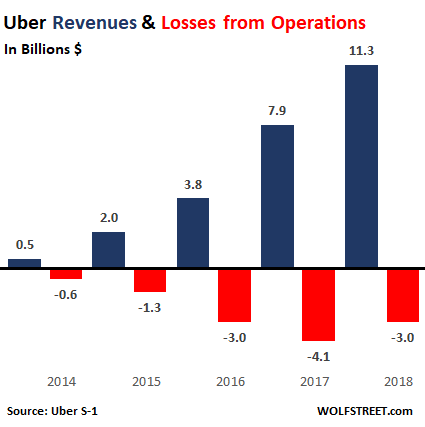
But what was the investment thesis?

What could possibly go wrong?

Uber has a superb strategy… for influencing investors…
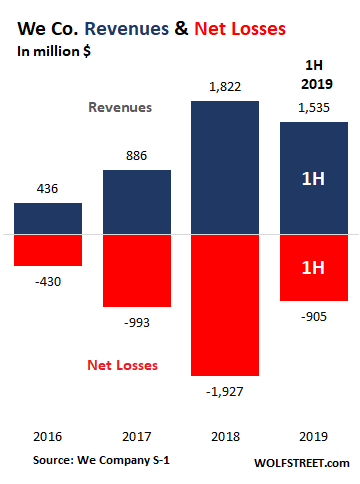
The jury is still out on this latest iteration of “strategy” copied by WeWork (loses $5,000 per renter per year). In 2018, the full-year loss of nearly $2 billion was 2.6 times larger than the loss in the first half. So it’s likely that the full-year regular loss in 2019 will be more than double its $904 million loss in the first half. So maybe a regular loss of $2 billion. Then there are the costs of its stock-based compensation during the IPO.
One strategic element t worthy of comment is Mismatched durations. It’s about mismatching your revenue (customers who can stop buying your product service soon/tomorrow) and investments ( WeWorks plethora of 10-year leases). This is especially risky going into a recession, when the ability to variabilize costs is limited, but revenue decline is unlimited.
WeWork has $47 billion in long-term obligations (leases) and will do $3 billion in revenue this year. What could go wrong?
There are other businesses like this (real estate, Hertz), and they are good businesses. Businesses that trade at 0.5 to 2x revenues. However, WeWork is claiming it’s not in this business. This is real-estate they are an SaaS company (Space as a Service) and they don’t have customers they have members… who can leave anytime they like. But is this firm, trading at 26x revenues, superior to Amazon, which trades at 4x revenues?
There appears to be no scale effects, as losses have kept pace with revenue growth. There is little pricing power, as they are still trading at a discount to other office leases. There is no defensible IP, no technology, no regulatory moats, no network effects, and no flywheel effect (the are no serious ancillary businesses).
The last round $47 billion “valuation” is an illusion. SoftBank invested at this valuation with a “preference” meaning their money is the first money out, limiting the downside.
Again… WeWork promises a bottomless well of cash… but not yet.
What could go wrong… you ask.
A recession.
The Atlantic’s Derek Thompson summed up the peculiarities of this subsidy with a recent tweet: “If you work at WeWork, drive home with Uber, and then order food by DoorDash, you’re engaging with three companies that are projected to lose about $13 billion this year.” Those losses are supposed to end with an eventual blind leap into profitability; in a bad economy, they may end a lot more suddenly than that. Presumably a few of the many money-losing, long-game-playing Silicon Valley companies will survive a recession — but how many? Gather your Uber rides while ye may …